Contact
Dr. Sören Kliem
Head
Reactor Safety
s.kliem hzdr.de
Phone: +49 351 260 2318
Department of Reactor Safety
Research
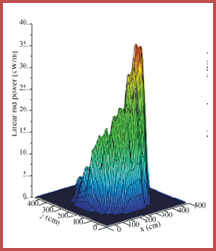
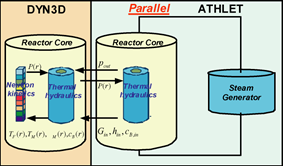
Neutron physics and reactor dynamics
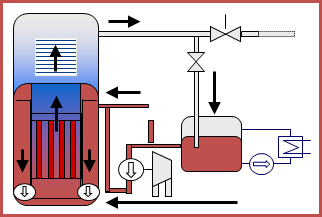
Plant dynamics and severe accident analysis
Monte-Carlo simulations (n- / γ-field calculations)
|
   |
Latest Publication
Numerical investigation on steam condensation and heat transfer in an emergency condenser tube with the thermo-hydraulic system code ATHLET: Post-test simulation of a series of COSMEA tests
Jobst, M.; Schäfer, F.; Kliem, S.
Abstract
The aim of the PANAS project, sponsored by the German Federal Ministry of Education and Research, was an in-depth analysis of the energy transfer processes of condensation and evaporation in inclined pipes at high and low system pressures, as they are used in passive residual heat removal systems for GEN III/III+ nuclear power plants. Passive residual heat removal systems play an important role in controlling accidents in the design basis, but also in beyond design basis accidents. By application of innovative measurement technologies, it was possible to study condensation and evaporation processes with an unprecedented temporal and spatial resolution, providing a new and unique database for further development and validation of CFD and system codes. With the work carried out in the project the experimental database was significantly expanded and an important contribution was made to provide sufficiently validated numerical tools, which allow authorities and experts to evaluate new reactor concepts and nuclear power plants with passive
residual heat removal systems.
Based on a series of COSMEA tests conducted in 2020 and 2021, the paper presents results of post-test simulations performed with a standard version of ATHLET as well as with an improved version of the code. After an overview on the research topics, the paper discusses the heat transfer phenomena in an emergency condenser pipe, the corresponding physical models implemented in ATHLET and the input deck developed to simulate the COSMEA tests. First results of the simulations with the standard version of ATHLET showed a significant underestimation of the transferred heat flow, an overestimation of the condensate outlet temperature and, depending on the experimental conditions, an underestimation or overestimation of the condensation rate. An in-depth analysis of the results helps to identify possible reasons for the deviations. The second set of simulations with an improved version of the code shows much better agreement with the experimental data. The corresponding part of the paper describes the modifications to the source code, the physical reasons behind these modifications and the improvements obtained with the updated models.
Keywords: Condensation heat transfer; passive safety systems; system code development; ATHLET; AC2
Involved research facilities
- TOPFLOW Facility
-
 Nuclear Engineering and Design 421(2024), 113059
DOI: 10.1016/j.nucengdes.2024.113059
Permalink: https://www.hzdr.de/publications/Publ-37143
Team
Head | |||||
| Name | Bld./Office | +49 351 260 | |||
|---|---|---|---|---|---|
| Dr. Sören Kliem | 250/108 | 2318 | s.kliemhzdr.de | ||
Employees | |||||
| Name | Bld./Office | +49 351 260 | |||
| Dr. Silvio Baier | 250/111 | 3034 | s.baierhzdr.de | ||
| Dr. Yurii Bilodid | 250/209 | 2020 | y.bilodidhzdr.de | ||
| Dr. Emil Fridman | 250/209 | 2167 | e.fridmanhzdr.de | ||
| Jörg Konheiser | 250/109 | 2416 | j.konheiserhzdr.de | ||
| Kerstin Kurde | 250/107 | 3025 | k.kurdehzdr.de | ||
| Dr. Evgeny Nikitin | 250/207 | 2906 | e.nikitinhzdr.de | ||
| Dr. Frank Schäfer | 250/117 | 2069 | f.schaeferhzdr.de | ||