| |
- M. Labat et al.
“Seeded free-electron laser driven by a compact laser plasma accelerator”, Nature Photonics 17, 150-156 (2023).
- F. Kroll et al. “Tumour irradiation in mice with a laser-accelerated proton beam”,
Nature Physics 18, 316 (2022)
- A. Debus et al. "Circumventing
the dephasing and depletion limits of laser-wakefield acceleration" Physical Review X 9, 031044 (2019)
- T. Ziegler et al. “Proton beam quality enhancement by spectral
phase control of a PW-class laser system”, Scientific Reports 11, 7338 (2021)
- N.P. Dover et al. “Enhanced ion acceleration from transparencydriven
foils demonstrated at two ultraintense laser facilities” Nature Light: Science and Applications 12, 71 (2023)
- M. Rehwald et al. “Ultra-short pulse laser acceleration
of protons to 80MeV from cryogenic hydrogen jets tailored to near-critical density”, in press in Nature
communications, (2023)
- J. P. Couperus et al. “Demonstration of a beam loaded nanocoulomb-class laser
wakefield accelerator”, Nature Communications 8, 487 (2017)
-
T. Suckert et al. “Models for
Translational Proton Radiobiology – From Bench to Bedside and Back” Cancers 13, 4216 (2021)
-
E. Beyreuther et al.
“Feasibility of proton FLASH effect tested by zebrafish embryo irradiation” Radiotherapy and Oncology 139, 46
(2019)
-
L. Karsch et al. “Beam pulse structure and dose rate as determinants for the flash
effect observed in zebrafish embryo” Radiotherapy and Oncology 173, 49 (2022)
-
M. Reimold et al. "Time-of-Flight spectroscopy for laser-driven proton beam monitoring” Scientific Reports 12, 21488
(2022)
-
F.-E. Brack et al. “Spectral and spatial shaping of laser-driven proton beams using a pulsed
high-field magnet beamline” Scientific Reports 10, 9118 (2020)
All publications
Beteiligtes Institut: Institut für Strahlenphysik
Aufsätze in ref. Zeitschriften
Mit "Online First"
Suche Titel/ Autoren: ("Schramm, U." OR "Zeil, K." OR "Kluge, T.")
Enhanced ion acceleration from transparency-driven foils demonstrated at two ultraintense laser facilities
Dover, N. P.; Ziegler, T.; Assenbaum, S.; Bernert, C.; Bock, S.; Brack, F.-E.; Cowan, T.; Ditter, E. J.; Garten, M.; Gaus, L.; Göthel, I.; Hicks, G. S.; Kiriyama, H.; Kluge, T.; Koga, J. K.; Kon, A.; Kondo, K.; Kraft, S.; Kroll, F.; Lowe, H. F.; Metzkes-Ng, J.; Miyatake, T.; Najmudin, Z.; Püschel, T.; Rehwald, M.; Reimold, M.; Sakaki, H.; Schlenvoigt, H.-P.; Shiokawa, K.; Umlandt, M. E. P.; Schramm, U.; Zeil, K.; Nishiuchi, M.
Laser-driven ion sources are a rapidly developing technology producing high energy, high peak current beams. Their suitability for applications, such as compact medical accelerators, motivates development of robust acceleration schemes using widely available repetitive ultraintense femtosecond lasers. These applications not only require high beam energy, but also place demanding requirements on the source stability and controllability. This can be seriously affected by the laser temporal contrast, precluding the replication of ion acceleration performance on independent laser systems with otherwise similar parameters. Here, we present the experimental generation of >60 MeV protons and >30 MeV u^{−1} carbon ions from sub-micrometre thickness Formvar foils irradiated with laser intensities >10^{21} W/cm^{2}. Ions are accelerated by an extreme localised space charge field ≳30 TVm^{−1}, over a million times higher than used in conventional accelerators. The field is formed by a rapid expulsion of electrons from the target bulk due to relativistically induced transparency, in which relativistic corrections to the refractive index enables laser transmission through normally opaque plasma. We replicate the mechanism on two different laser facilities and show that the optimum target thickness decreases with improved laser contrast due to reduced pre-expansion. Our demonstration that energetic ions can be accelerated by this mechanism at different contrast levels relaxes laser requirements and indicates interaction parameters for realising application-specific beam delivery.
Beteiligte Forschungsanlagen
Time-resolved optical shadowgraphy of solid hydrogen jets as a testbed to benchmark particle-in-cell simulations
Yang, L.; Huang, L.; Assenbaum, S.; Cowan, T.; Göthel, I.; Göde, S.; Kluge, T.; Rehwald, M.; Pan, X.; Schramm, U.; Vorberger, J.; Zeil, K.; Ziegler, T.; Bernert, C.
Particle-in-cell (PIC) simulations are a widely-used tool to model kinetics-dominated plasmas in ultrarelativistic laser-solid interactions (dimensionless vectorpotential a0 > 1). However, interactions approaching subrelativistic laser intensities (a0 ≲ 1) are governed by correlated and collisional plasma physics, calling for benchmarks of available modeling capabilities and the establishment of standardized testbeds. Here, we propose such a testbed to experimentally benchmark PIC simulations of laser-solid interactions using a laser-irradiated micron-sized cryogenic hydrogen-jet target. Time-resolved optical shadowgraphy of the expanding plasma density, complemented by hydrodynamics and ray-tracing simulations, is used to determine the bulk-electron-temperature evolution after laser irradiation. We showcase our testbed by studying isochoric heating of solid hydrogen induced by laser pulses with a dimensionless vectorpotential of a0 ≈ 1. Our testbed reveals that the initial surface-density gradient of the target is decisive to reach quantitative agreement at 1 ps after the interaction, demonstrating its suitability to benchmark controlled parameter scans at subrelativistic laser intensities.
Beteiligte Forschungsanlagen
Probing shock dynamics inside micro-wire targets after high-intensity laser irradiation using small angle x-ray scattering of a free-electron laser
Kluge, T.; Bussmann, M.; Galtier, E.; Glenzer, S.; Grenzer, J.; Gutt, C.; Hartley, N. J.; Huang, L.; Laso García, A.; Ja Lee, H.; McBride, E. E.; Metzkes-Ng, J.; Nakatsutsumi, M.; Nam, I.; Pelka, A.; Prencipe, I.; Randolph, L.; Rehwald, M.; Rödel, C.; Rödel, M.; Toncian, T.; Yang, L.; Zeil, K.; Schramm, U.; Cowan, T.
In this paper, we present an experiment that explores the plasma dynamics of a 7 μm diameter carbon wire after being irradiated with a near-relativistic-intensity short pulse laser. Using an x-ray free electron laser pulse to measure the small angle x-ray scattering signal, we observe that the scattering surface is bent and prone to instability over tens of picoseconds. The dynamics of this process are consistent with the presence of a sharp, propagating shock front inside the wire, moving at a speed close to the hole boring velocity or that expected from a thermal shock at a few tens of Mbar.
Keywords:
plasma; SAXS; XFEL; laser; proton acceleration
Verknüpfte Publikationen
Reduction of the electron beam divergence of laser wakefield-accelerators by integrated plamsa lens
Chang, Y.-Y.; Couperus Cabadağ, J. P.; Debus, A.; Ghaith, A.; La Berge, M.; Pausch, R.; Schöbel, S.; Ufer, P.; Schramm, U.; Irman, A.
We report on electron beam collimation using a passive plasma lens, integrated directly and conveniently into a laser wakefield accelerator stage operating in the high charge regime. The lens is created by reshaping the gas density profile of a super-sonic jet at the beam's exit side through an obstacle mounted above the jet. It reduces the beam's divergence by a factor of two to below 1 mrad (root-mean-square), while preserving the total charge of 170 pC and maintaining the energy spread. The resulting spectral-charge density, here defined as the charge per energy bandwidth and emission angle, of up to 7 pC/(MeV·mrad) played a key role in the recent experimental demonstration of free-electron lasing. The presented simple and robust gas shaping technique holds the potential to generate specific density profiles, essential for the application of adiabatic focusing or staging of accelerators.
Keywords:
LWFA; Plasma Lens; PIConGPU
Beteiligte Forschungsanlagen
Ultra-short pulse laser acceleration of protons to 80 MeV from cryogenic hydrogen jets tailored to near-critical density
Rehwald, M.; Assenbaum, S.; Bernert, C.; Brack, F.-E.; Bussmann, M.; Cowan, T.; Curry, C. B.; Fiuza, F.; Garten, M.; Gaus, L.; Gauthier, M.; Göde, S.; Göthel, I.; Glenzer, S. H.; Huang, L.; Huebl, A.; Kim, J. B.; Kluge, T.; Kraft, S.; Kroll, F.; Metzkes-Ng, J.; Miethlinger, T.; Löser, M.; Obst-Huebl, L.; Reimold, M.; Schlenvoigt, H.-P.; Schoenwaelder, C.; Schramm, U.; Siebold, M.; Treffert, F.; Yang, L.; Ziegler, T.; Zeil, K.
Laser plasma-based particle accelerators attract great interest in fields where conventional accelerators reach limits based on size, cost or beam parameters. Despite the fact that particle in cell simulations have predicted several advantageous ion acceleration schemes, laser accelerators have not yet reached their full potential in producing simultaneous high-radiation doses at high particle energies. The most stringent limitation is the lack of a suitable high-repetition rate target that also provides a high degree of control of the plasma conditions required to access these advanced regimes. Here, we demonstrate that the interaction of petawatt-class laser pulses with a pre-formed micrometer-sized cryogenic hydrogen jet plasma overcomes these limitations enabling tailored density scans from the solid to the underdense regime. Our proof-of-concept experiment demonstrates that the near-critical plasma density profile produces proton energies of up to 80 MeV. Based on hydrodynamic and three-dimensional particle in cell simulations, transition between different acceleration schemes are shown, suggesting enhanced proton acceleration at the relativistic transparency front for the optimal case.
Keywords:
Laser-produced plasmas; Plasma-based accelerators; Laser proton acceleration
Beteiligte Forschungsanlagen
Verknüpfte Publikationen
Downloads
The DRESDEN PLATFORM – A Research Hub for Ultra-high Dose Rate Radiobiology
Metzkes-Ng, J.; Brack, F.-E.; Kroll, F.; Bernert, C.; Bock, S.; Bodenstein, E.; Brand, M.; Cowan, T.; Gebhardt, R.; Hans, S.; Helbig, U.; Horst, F. E.; Jansen, J.; Kraft, S.; Krause, M.; Leßmann, E.; Löck, S.; Pawelke, J.; Püschel, T.; Reimold, M.; Rehwald, M.; Richter, C.; Schlenvoigt, H.-P.; Schramm, U.; Schürer, M.; Seco, J.; Szabó, E. R.; Umlandt, M. E. P.; Zeil, K.; Ziegler, T.; Beyreuther, E.
The recently observed FLASH effect provides normal tissue protection at a similar tumor treatment efficacy via ultra-high dose rate (UHDR) irradiation and promises great benefits for radiotherapy patients. Dedicated studies are now necessary to define a robust set of dose application parameters for FLASH radiotherapy and to identify underlying mechanisms. These studies require particle accelerators with variable temporal dose application characteristics for numerous radiation qualities, equipped for preclinical radiobiological research. Here we present the DRESDEN PLATFORM, a research hub for ultra-high dose rate radiobiology. By uniting clinical and research accelerators with radiobiology infrastructure and know-how, the DRESDEN PLATFORM offers a unique environment for studying the FLASH effect. We introduce its experimental capabilities and qualify the platform for systematic investigation of FLASH by presenting results from a concerted in vivo radiobiology study with zebrafish embryos. The comparative pre-clinical study was conducted across three accelerator facilities, including an advanced laser-driven proton source applied for FLASH-relevant in vivo irradiations for the first time. The data show a protective effect of UHDR irradiation up to 10^5 Gy/s and suggests consistency of the protective effect even at escalated dose rates of 10^9 Gy/s. With
the first clinical FLASH studies underway, research facilities like the DRESDEN PLATFORM, addressing the open questions surrounding FLASH, are essential to accelerate FLASH’s translation into clinical practice.
Keywords:
Laser-Plasma Acceleration; FLASH; Radiobiology; Laser-driven proton acceleration; TNSA; UHDR; Ultra-high dose rate; Cancer; Radiotherapy
Beteiligte Forschungsanlagen
Verknüpfte Publikationen
Heating in multi-layer targets at ultra-high intensity laser irradiation and the impact of density oscillation
Paschke-Brühl, F.-L.; Kluge, T.; Marre, B. E.; Garten, M.; Schramm, U.; Cowan, T.; Huang, L.; Banjafar, M.; Randolph, L.; Nakatsutsumi, M.
Article about Heating in multi-layered target upon UHI laser irradiation
Keywords:
Isochoric Heating; Multi layer; PIC simulation; ultra-high intenstiy laser; plasma; GISAXS
Millijoule Ultrafast Optical Parametric Amplification as Replacement for High-Gain Regenerative Amplifiers
Zobus, Y.; Brabetz, C.; Hornung, J.; Ohland, J.; Reemts, D.; Zou, J.-P.; Löser, M.; Albach, D.; Schramm, U.; Bagnoud, V.
We report on the development of an ultrafast optical parametric amplifier (uOPA) front-end for the Petawatt High Energy Laser for heavy Ion eXperiments (PHELIX) and the Petawatt ENergy-Efficient Laser for Optical Plasma Experiments (PE NELOPE). This front-end delivers broadband and stable amplification up to 1 mJ per pulse while maintaining a high beam quality. Its implementation at PHELIX allowed to bypass a front-end amplifier that was known to be a source of pre-pulses. With the bypass, an amplified spontaneous emission (ASE) contrast of 4.9·10−13 and a pre-pulse c ntrast
of 6.2·10−11 could be realized. Due to its high stability, high beam quality and its versatile pump amplifier, the system
offers an alternative for high-gain regenerative amplifiers in the front-end of vario
Keywords:
ultrafast optical parametric amplification; temporal laser contrast
Three-dimensional acoustic monitoring of laser-accelerated protons in the focus of a pulsed-power solenoid lens
Gerlach, S.; Balling, F.; Schmidt, A. K.; Brack, F.-E.; Kroll, F.; Metzkes-Ng, J.; Reimold, M.; Schramm, U.; Speicher, M.; Zeil, K.; Parodi, K.; Schreiber, J.
The acoustic pulse emitted from the Bragg peak of a laser-accelerated proton bunch focused into water has recently enabled the reconstruction of the bunch energy distribution. By adding three ultrasonic transducers and implementing a fast data analysis of the filtered raw signals, I-BEAT (Ion-Bunch Energy Acoustic Tracing) 3D now provides the mean bunch energy and absolute lateral bunch position in real-time and for individual bunches. Relative changes in energy spread and lateral bunch size can also be monitored. Our experiments at DRACO with proton bunch energies between 10 and 30 MeV reveal sub-MeV and sub-mm resolution. In addition to this 3D bunch information, the signal strength correlates also with the absolute bunch particle number.
Keywords:
DRACO; laser ion acceleration; ALBUS; high-field magnets; beamline; TNSA; detector; ionoaccoustics; ion diagnostics
Beteiligte Forschungsanlagen
XUV Fluorescence Detection of Laser-Cooled Stored Relativistic Ions
Ueberholz, K.; Bozyk, L.; Bussmann, M.; Eizenhöfer, N.; Hannen, V.; Horst, M.; Kiefer, D.; Kiefer, N.; Klammes, S.; Kühl, T.; Langfeld, B.; Löser, M.; Ma, X.; Nörtershäuser, W.; Sánchez, R.; Schramm, U.; Siebold, M.; Spiller, P.; Steck, M.; Stöhlker, T.; Walther, T.; Wang, H.; Weinheimer, C.; Wen, W.; Winters, D.
An improved moveable in vacuo XUV fluorescence detection system was employed for the laser cooling of bunched relativistic (β = 0.47) carbon ions at the Experimental Storage Ring (ESR) of GSI Helmholtzzentrum Darmstadt, Germany. Strongly Doppler boosted XUV fluorescence (∼90 nm) was emitted from the ions in a forward light cone after laser excitation of the 2s–2p transition (∼155 nm) by a new tunable pulsed UV laser system (257 nm). It was shown that the detected fluorescence strongly depends on the position of the detector around the bunched ion beam and on the delay (∼ns) between the ion bunches and the laser pulses. In addition, the fluorescence information could be directly combined with the revolution frequencies of the ions (and their longitudinal momentum spread), which were recorded using the Schottky resonator at the ESR. These fluorescence detection features are required for future laser cooling experiments at highly relativistic energies (up to γ∼ 13) and high intensities (up to 1011 particles) of ion beams in the new heavy ion synchrotron SIS100 at FAIR.
Progress in Hybrid Plasma Wakefield Acceleration
Hidding, B.; Assmann, R.; Bussmann, M.; Campbell, D.; Chang, Y.-Y.; Corde, S.; Couperus Cabadağ, J. P.; Debus, A.; Döpp, A.; Gilljohann, M.; Götzfried, J.; Moritz Foerster, F.; Haberstroh, F.; Habib, F.; Heinemann, T.; Hollatz, D.; Irman, A.; Kaluza, M.; Karsch, S.; Kononenko, O.; Knetsch, A.; Kurz, T.; Kuschel, S.; Köhler, A.; Martinez De La Ossa, A.; Nutter, A.; Pausch, R.; Raj, G.; Schramm, U.; Schöbel, S.; Seidel, A.; Steiniger, K.; Ufer, P.; Yeung, M.; Zarini, O.; Zepf, M.
Plasma wakefield accelerators can be driven either by intense laser pulses (LWFA) or by intense particle beams (PWFA). A third approach that combines the complementary advantages of both types of plasma wakefield accelerator has been established with increasing success over the last decade and is called hybrid LWFA→PWFA. Essentially, a compact LWFA is exploited to produce an energetic, high-current electron beam as a driver for a subsequent PWFA stage, which, in turn, is exploited for phase-constant, inherently laser-synchronized, quasi-static acceleration over extended acceleration lengths. The sum is greater than its parts: the approach not only provides a compact, cost-effective alternative to linac-driven PWFA for exploitation of PWFA and its advantages for acceleration and high-brightness beam generation, but extends the parameter range accessible for PWFA and, through the added benefit of co-location of inherently synchronized laser pulses, enables high-precision pump/probing, injection, seeding and unique experimental constellations, e.g., for beam coordination and collision experiments. We report on the accelerating progress of the approach achieved in a series of collaborative experiments and discuss future prospects and potential impact.
Keywords:
plasma wakefield acceleration; LWFA; PWFA; compact particle acceleration; radiation sources
Beteiligte Forschungsanlagen
Verknüpfte Publikationen
Explanation for the observed wide deceleration range on a coasting ion beam by a CW laser at the storage ring CSRe
Chen, D. Y.; Wang, H. B.; Wen, W. Q.; Yuan, Y. J.; Zhang, D. C.; Huang, Z. K.; Winters, D.; Klammes, S.; Kiefer, D.; Walther, T.; Löser, M.; Siebold, M.; Schramm, U.; Li, J.; Tang, M. T.; Wu, J. X.; Yin, D. Y.; Mao, L. J.; Yang, J. C.; Zhang, S. F.; Bussmann, M.; Ma, X.
A significant deceleration effect on a stored coasting ion beam by a continuous-wave laser light was observed in the Schottky-noise spectrum during the laser experiments with lithium-like oxygen ion beams stored at a relativistic energy of 275.7 MeV/u at the heavy-ion storage ring CSRe in Lanzhou, China. The observed deceleration range of the laser (Δp/p≈5.7×10−6) is much broader than the expected capture range (Δp/p≈3.6×10−8), as calculated from the natural linewidth of the O5+ ion’s electronic transition (2S1/2 −2 P1/2). In order to explain this huge deviation, a phase space tracking code has been developed to investigate the interaction between the stored coasting ion beam and the laser light. Simulations reveal that the deceleration range of the typically narrow CW laser force is highly enlarged by taking into account the transverse betatron oscillation of the ions with larger emittance and the angular misalignment of the laser light direction. The experimental observation is well described by the systematic simulations. The present work is crucial for forthcoming laser cooling and precision laser spectroscopy experiments and simulations on heavy highly charged ions at the CSRe and the future facility HIAF.
Keywords:
Betatron oscillation; Heavy-ion storage ring; Ion–laser interaction; Laser cooling; Schottky-noise spectrum
miniSCIDOM: a scintillator-based tomograph for volumetric dose reconstruction of single laser-driven proton bunches
Corvino, A.; Reimold, M.; Beyreuther, E.; Brack, F.-E.; Kroll, F.; Pawelke, J.; Schilz, J.; Schneider, M.; Schramm, U.; Umlandt, M. E. P.; Zeil, K.; Ziegler, T.; Metzkes-Ng, J.
Laser plasma accelerators enable the generation of intense and short proton bunches on a micrometer scale, thus offering new experimental capabilities to research fields like ultra-high dose rate radiobiology or material analysis. Being spectrally broadband, laser-accelerated proton bunches allow for tailored volumetric dose deposition in a sample via single bunches to excite or probe specific sample properties. The rising number of such experiments indicates a need for diagnostics providing spatially-resolved characterization of dose distributions with volumes of ∼1 cm³ for single proton bunches to allow for fast online feedback.
Here we present the scintillator-based miniSCIDOM detector for online single-bunch tomographic reconstruction of dose distributions in volumes of up to ∼1 cm³. The detector achieves a spatial resolution below 500 μm and a sensitivity of 100 mGy. The detector performance is tested at a proton therapy cyclotron and an LPA proton source. The experiments’ primary focus is the characterization of the scintillator’s ionization quenching behavior.
Keywords:
laser-driven proton beams; ultra-high dose rate; beam monitoring detectors; scintillator-based diagnostics
Beteiligte Forschungsanlagen
Verknüpfte Publikationen
OCTOPOD: single bunch tomography for angular-spectral characterization of laser-driven protons
Reimold, M.; Assenbaum, S.; Beyreuther, E.; Bodenstein, E.; Brack, F.-E.; Eisenmann, C.; Englbrecht, F.; Kroll, F.; Lindner, F.; Masood, U.; Pawelke, J.; Schramm, U.; Schneider, M.; Sobiella, M.; Umlandt, M. E. P.; Vescovi Pinochet, M. A.; Zeil, K.; Ziegler, T.; Metzkes-Ng, J.
Laser-plasma accelerated (LPA) proton bunches are now prepared and provided for research fields ranging from ultra-high dose rate radiobiology to material science and probing of extreme states of matter. Yet, the capabilities to fully characterize the spectrally and angularly broad LPA bunches lag behind the rapidly evolving applications. The Optical Cone beam TOmograph for Proton Online Dosimetry - short OCTOPOD - translates the angularly resolved spectral characterization of LPA proton bunches into the spatially resolved detection of the volumetric dose distribution deposited in a liquid scintillator. Up to 24 multi-pinhole arrays record projections of the volumetric scintillation light distribution and allow for tomographic reconstruction of the volumetric dose deposition pattern, from which proton spectra may be retrieved in arbitrary directions by spectral deconvolution.
Applying the OCTOPOD at a cyclotron, we show the reliable retrieval of various spatial dose deposition patterns and detector sensitivity over a broad dose range from less than 1 Gy to more than 100 Gy, as required for LPA proton bunch characterization. With a dedicated vacuum housing, the OCTOPOD was installed at a LPA proton source, providing real-time data on proton acceleration performance for various laser-target interaction parameters and attesting the system optimal performance in the harsh laser plasma environment.
Keywords:
laser-plasma acceleration of protons; proton detector; tomographic reconstruction
Beteiligte Forschungsanlagen
Verknüpfte Publikationen
The ELBE infrared and THz facility at Helmholtz-Zentrum Dresden Rossendorf
Helm, M.; Winnerl, S.; Pashkin, O.; Klopf, J. M.; Deinert, J.-C.; Kovalev, S.; Evtushenko, P.; Lehnert, U.; Xiang, R.; Arnold, A.; Wagner, A.; Schmidt, S. M.; Schramm, U.; Cowan, T.; Michel, P.
The coherent infrared and THz sources driven by the superconducting electron accelerator ELBE are described. The present status of the facility is summarized and a few scientific highlights are mentioned. Finally plans for a successor facility (Dresden Advanced Light Infrastructure, DALI) are outlined along with the most important scientific and technological challenges.
Keywords:
terahertz source; infrared source; ELBE; DALI; electron accelerator
Beteiligte Forschungsanlagen
Verknüpfte Publikationen
Spectral-temporal Measurement Capabilities of Third-order Correlators
Bock, S.; Oksenhendler, T.; Püschel, T.; Gebhardt, R.; Helbig, U.; Pausch, R.; Ziegler, T.; Bernert, C.; Zeil, K.; Irman, A.; Toncian, T.; Kiriyama, H.; Nishiuchi, M.; Kon, A.; Schramm, U.
We present a method extending scanning third-order correlator temporal pulse14
evolution measurement capabilities of high power short pulse lasers to spectral sensitivity within15
the spectral range exploited by typical chirped pulse amplification systems. Modelling of the16
spectral response achieved by angle tuning of the third harmonic generating crystal is applied17
and experimentally validated. Exemplary measurements of spectrally resolved pulse contrast of a18
Petawatt laser frontend illustrate the importance of full bandwidth coverage for the interpretation19
of relativistic laser target interaction in particular for the case of solid targets.
Beteiligte Forschungsanlagen
Survey of spatio-temporal couplings throughout high-power ultrashort lasers
Jeandet, A.; Jolly, S. W.; Borot, A.; Bussière, B.; Dumont, P.; Gautier, J.; Gobert, O.; Goddet, J.-P.; Gonsalves, A.; Irman, A.; Leemans, W. P.; Lopez-Martens, R.; Mennerat, G.; Nakamura, K.; Ouillé, M.; Pariente, G.; Pittman, M.; Püschel, T.; Sanson, F.; Sylla, F.; Thaury, C.; Zeil, K.; Fabien Quéré, A.
The investigation of spatio-temporal couplings (STCs) of broadband light beams is
becoming a key topic for the optimization as well as applications of ultrashort laser systems.
This calls for accurate measurements of STCs. Yet, it is only recently that such complete
spatio-temporal or spatio-spectral characterization has become possible, and it has so far mostly
been implemented at the output of the laser systems, where experiments take place. In this survey,
we present for the first time STC measurements at different stages of a collection of high-power
ultrashort laser systems, all based on the chirped-pulse amplification (CPA) technique, but with
very different output characteristics. This measurement campaign reveals spatio-temporal effects
with various sources, and motivates the expanded use of STC characterization throughout CPA
laser chains, as well as in a wider range of types of ultrafast laser systems. In this way knowledge
will be gained not only about potential defects, but also about the fundamental dynamics and
operating regimes of advanced ultrashort laser systems.
Beteiligte Forschungsanlagen
Characterization of the plasma mirror system at the J-KAREN-P facility
Kon, A.; Nishiuchi, M.; Fukuda, Y.; Kondo, K.; Ogura, K.; Sagisaka, A.; Miyasaka, Y.; Dover, N. P.; Kando, M.; Pirozhkov, A. S.; Daito, I.; Chang, L.; Woo Choi, I.; Hee Nam, C.; Ziegler, T.; Schlenvoigt, H.-P.; Zeil, K.; Schramm, U.; Kiriyama, H.
We report on the design and characterization of the plasma mirror system installed on the J-KAREN-P laser at the Kansai
Photon Science Institute, National Institutes for Quantum Science and Technology. The reflectivity of the single plasma
mirror system exceeded 80%. In addition, the temporal contrast was improved by two orders of magnitude at 1 ps before
the main pulse. Furthermore, the laser near-field spatial distribution after the plasma mirror was kept constant at plasma
mirror fluence of less than 100 kJ/cm2. We also present the results of investigating the difference and the fluctuation in
energy, pulse width and pointing stability with and without the plasma mirror system.
Seeded free-electron laser driven by a compact laser plasma accelerator
Labat, M.; Couperus Cabadağ, J. P.; Ghaith, A.; Irman, A.; Berlioux, A.; Berteaud, P.; Blache, F.; Bock, S.; Bouvet, F.; Briquez, F.; Chang, Y.-Y.; Corde, S.; Debus, A.; de Oliveira, C.; Duval, J.-P.; Dietrich, Y.; El Ajjouri, M.; Eisenmann, C.; Gautier, J.; Gebhardt, R.; Grams, S.; Helbig, U.; Herbeaux, C.; Hubert, N.; Kitegi, C.; Kononenko, O.; Kuntzsch, M.; La Berge, M.; Le, S.; Leluan, B.; Loulergue, A.; Malka, V.; Marteau, F.; Huy N. Guyen, M.; Oumbarek-Espinos, D.; Pausch, R.; Pereira, D.; Püschel, T.; Ricaud, J.-P.; Rommeluere, P.; Roussel, E.; Rousseau, P.; Schöbel, S.; Sebdaoui, M.; Steiniger, K.; Tavakoli, K.; Thaury, C.; Ufer, P.; Valleau, M.; Vandenberghe, M.; Veteran, J.; Schramm, U.; Couprie, M.-E.
Seeded free-electron laser driven by a compact laser plasma accelerator
Free-electron lasers generate high-brilliance coherent radiation at
wavelengths spanning from the infrared to the X-ray domains. The recent
development of short-wavelength seeded free-electron lasers now allows
for unprecedented levels of control on longitudinal coherence, opening
new scientific avenues such as ultra-fast dynamics on complex systems
and X-ray nonlinear optics. Although those devices rely on state-of-the-art
large-scale accelerators, advancements on laser-plasma accelerators, which
harness gigavolt-per-centimetre accelerating fields, showcase a promising
technology as compact drivers for free-electron lasers. Using such
footprint-reduced accelerators, exponential amplification of a shot-noise
type of radiation in a self-amplified spontaneous emission configuration
was recently achieved. However, employing this compact approach for the
delivery of temporally coherent pulses in a controlled manner has remained
a major challenge. Here we present the experimental demonstration
of a laser-plasma accelerator-driven free-electron laser in a seeded
configuration, where control over the radiation wavelength is accomplished.
Furthermore, the appearance of interference fringes, resulting from the
interaction between the phase-locked emitted radiation and the seed,
confirms longitudinal coherence. Building on our scientific achievements,
we anticipate a navigable pathway to extreme-ultraviolet wavelengths,
paving the way towards smaller-scale free-electron lasers, unique tools for a
multitude of applications in industry, laboratories and universities.
Keywords:
free electron laser; laser plasma accelerator; seeded FEL driven by LPA beams
Beteiligte Forschungsanlagen
Downloads
Stable and High-Quality Electron Beams from Staged Laser and Plasma Wakefield Accelerators
Foerster, F. M.; Döpp, A.; Haberstroh, F.; Grafenstein, K. V.; Campbell, D.; Chang, Y.-Y.; Corde, S.; Couperus Cabadağ, J. P.; Debus, A.; Gilljohann, M. F.; Habib, A. F.; Heinemann, T.; Hidding, B.; Irman, A.; Irshad, F.; Knetsch, A.; Kononenko, O.; Martinez De La Ossa, A.; Nutter, A.; Pausch, R.; Schilling, G.; Schletter, A.; Schöbel, S.; Schramm, U.; Travac, E.; Ufer, P.; Karsch, S.
We present experimental results on a plasma wakefield accelerator (PWFA) driven by high-current
electron beams from a laser wakefield accelerator (LWFA). In this staged setup stable and high-quality
(low-divergence and low energy spread) electron beams are generated at an optically generated hydro-
dynamic shock in the PWFA. The energy stability of the beams produced by that arrangement in the PWFA
stage is comparable to both single-stage laser accelerators and plasma wakefield accelerators driven by
conventional accelerators. Simulations support that the intrinsic insensitivity of PWFAs to driver energy
fluctuations can be exploited to overcome stability limitations of state-of-the-art laser wakefield
accelerators when adding a PWFA stage. Furthermore, we demonstrate the generation of electron bunches
with energy spread and divergence superior to single-stage LWFAs, resulting in bunches with dense phase
space and an angular-spectral charge density beyond the initial drive beam parameters. These results
unambiguously show that staged LWFA-PWFA can help to tailor the electron-beam quality for certain
applications and to reduce the influence of fluctuating laser drivers on the electron-beam stability. This
encourages further development of this new class of staged wakefield acceleration as a viable scheme
toward compact, high-quality electron beam sources.
Keywords:
hybrid lwfa-pwfa
Beteiligte Forschungsanlagen
Downloads
Analyzing the filamentation of MeV-range proton bunches in a laser-driven ion beamline and optimizing their peak intensity
Metternich, M.; Nazary, H.; Schumacher, D.; Brabetz, C.; Kroll, F.; Brack, F.-E.; Ehret, M.; Blažević, A.; Schramm, U.; Bagnoud, V.; Roth, M.
In this article, we report on the latest investigations and achievements in proton beam shaping with our laser-driven ion beamline at GSI Helmholtzzentrum für Schwerionenforschung GmbH. This beamline was realized within the framework of the Laser Ion Generation, Handling, and Transport (LIGHT) collaboration to study the combination of laser-driven ion beams with conventional accelerator components. At its current state, the ions are accelerated by the high-power laser PHELIX via target normal sheath acceleration, and two pulsed high-magnetic solenoids are used for energy selection, transport, and transverse focusing. In between the two solenoids, there is a rf cavity that gives the LIGHT beamline the capability to longitudinally manipulate and temporally compress ion bunches to sub-nanosecond durations. To get optimal results, the rf cavity has to be synchronized with the PHELIX laser and therefore a reliable measurement of the temporal ion beam profile is necessary. In the past, these measurements showed unexpected correlations between the temporal beam profile and the phase as well as the electric field strength of the cavity. In this article, we present a numerical simulation of the beam transport through the LIGHT beamline which explains this behavior by a beam filamentation. We also report on our latest experimental campaigns, in which we combined transverse and longitudinal focusing for the first time. This led to proton bunches with a peak intensity of (3.28±0.24)×108 protons/(ns mm2) at a central energy of (7.72±0.14) MeV. The intensity refers to a circle with a diameter of (1.38±0.02) mm that encloses 50% of the protons in the focal spot at the end of the beamline. The temporal bunch width at this position was (742±40) ps (FWHM).
Keywords:
Laser acceleration; TNSA; Proton beam; beamline
Distortions in focusing laser pulses due to spatio-temporal couplings – An analytic description
Steiniger, K.; Dietrich, F.; Albach, D.; Bussmann, M.; Irman, A.; Löser, M.; Pausch, R.; Püschel, T.; Sauerbrey, R.; Schöbel, S.; Schramm, U.; Siebold, M.; Zeil, K.; Debus, A.
In ultra-short laser pulses, small changes in dispersion properties before the final focusing mirror can
lead to severe pulse distortions around the focus and therefore to very different pulse properties at the
point of laser-matter interaction yielding unexpected interaction results. The mapping between far and
near-field laser properties intricately depends on the spatial and angular dispersion properties as well as the
focal geometry. For a focusing Gaussian laser pulse subject to angular, spatial, and group delay dispersion,
we derive analytical expressions for its pulse-front tilt, duration, and width from a fully analytic expression
for its electric field in time-space domain. This expression is not only valid in and near the focus but along
the entire propagation distance from the focusing mirror to the focus. Together with expressions relating
angular, spatial, and group delay dispersion before focusing at an off-axis parabola to the respective values
in the pulse’s focus, these formulas are used to show in example setups that pulse-front tilts of lasers
with small initial dispersion can become several ten degrees large in the vicinity of the focus while being
small directly in the focus. The formulas derived here provide the analytical foundation for observations
previously made in numerical experiments. By numerically simulating Gaussian pulse propagation and
measuring properties of the pulse at distances several Rayleigh lengths off the focus we verified the analytic
expressions.
Keywords:
pulse propagation; pulse-front tilt; laser dispersion; high-power laser; ultrafast optics
Verknüpfte Publikationen
Transient Laser-Induced Breakdown of Dielectrics in Ultrarelativistic Laser-Solid Interactions
Bernert, C.; Assenbaum, S.; Bock, S.; Brack, F.-E.; Cowan, T.; Curry, C. B.; Garten, M.; Gaus, L.; Gauthier, M.; Gebhardt, R.; GöDe, S.; Glenzer, S. H.; Helbig, U.; Kluge, T.; Kraft, S.; Kroll, F.; Obst-Huebl, L.; Püschel, T.; Rehwald, M.; Schlenvoigt, H.-P.; Schoenwaelder, C.; Schramm, U.; Treffert, F.; Vescovi Pinochet, M. A.; Ziegler, T.; Zeil, K.
For high-intensity laser-solid interactions, the absolute density and surface density gradients of the target at the arrival of the ultra-relativistic laser peak are critical parameters. Accurate modeling of the leading edge-driven target pre-expansion is desired to strengthen the predictive power of associated computer simulations. The transition from an initial solid state to a plasma state, i.e., the breakdown of the solid, defines the starting point of the subsequent target pre-expansion. In this work, we report on the time-resolved observation of transient laser-induced breakdown (LIB) during the leading edge of high-intensity petawatt-class laser pulses with peak intensities of up to 5.7 × 10^21 W/cm^2 in interaction with dielectric cryogenic hydrogen jet targets. LIB occurs much earlier than what is typically expected following the concept of barrier suppression ionization. The observation is explained by comparing a characterization study of target
specific LIB thresholds with laser contrast measurements. The results demonstrate the relevance of the laser pulse duration dependence of LIB for high-intensity laser-solid interactions. We provide an effective approach to determine the onset of LIB and thereby the starting point of target pre-expansion in other laser-target systems.
Keywords:
High intensity laser-plasma interactions; High-energy-density plasmas; Laser driven ion acceleration; Laser-plasma interactions; Plasma production and heating by laser beams; Femtosecond laser irradiation; Laser ablation; Optical plasma measurements; Photoionization; Ultrafast femtosecond pump probe
Beteiligte Forschungsanlagen
Dosimetry for radiobiological in-vivo experiments at laser plasma-based proton accelerators
Reimold, M.; Assenbaum, S.; Bernert, C.; Beyreuther, E.; Brack, F.-E.; Karsch, L.; Kraft, S.; Kroll, F.; Nossula, A.; Pawelke, J.; Rehwald, M.; Schlenvoigt, H.-P.; Schramm, U.; Umlandt, M. E. P.; Zeil, K.; Ziegler, T.; Metzkes-Ng, J.
Laser plasma-based proton accelerators (LPA) can contribute to research of ultra-high dose rate radiobiology as they provide pulse dose rates unprecedented at medical proton sources. Yet, LPAs pose challenges regarding precise dosimetry due to the high pulse dose rates, but also due to the sources' lower spectral stability and pulsed operation mode. For in-vivo models, further challenges arise from the necessary small field dosimetry for volumetric dose distributions.
In this work, we present a dosimetry and beam monitoring concept for in-vivo irradiations of small target volumes with LPA protons, solving aforementioned challenges. The volumetric dose distribution in a sample (mean dose value and lateral/depth dose inhomogeneity) is provided by combining two independent dose measurements using radiochromic films (dose-rate independent) and ionization chambers (dose-rate dependent), respectively. The unique feature of the dosimetric setup is beam monitoring with a transmission time-of-flight spectrometer to quantify spectral fluctuations of the irradiating proton pulses. The resulting changes in the depth dose profile during irradiation of an in-vivo sample are hence accessible and enable pulse-resolved depth dose correction for each dose measurement.
A first successful small animal pilot study using an LPA proton source serves as a testcase for the presented dosimetry approach and proves its performance in a realistic setting.
Keywords:
laser plasma-based proton acceleration; ultra-high dose rate; radiobiology
Beteiligte Forschungsanlagen
Verknüpfte Publikationen
Effect of driver charge on wakefield characteristics in a plasma accelerator probed by femtosecond shadowgraphy
Schöbel, S.; Pausch, R.; Chang, Y.-Y.; Corde, S.; Couperus Cabadağ, J. P.; Debus, A.; Ding, H.; Döpp, A.; Moritz Foerster, F.; Gilljohann, M.; Haberstroh, F.; Heinemann, T.; Hidding, B.; Karsch, S.; Köhler, A.; Kononenko, O.; Kurz, T.; Nutter, A.; Steiniger, K.; Ufer, P.; Martinez De La Ossa, A.; Schramm, U.; Irman, A.
We report on experimental investigations of plasma wave structures in a plasma wakefield acceleration (PWFA) stage which is driven by electron beams from a preceding laser plasma accelerator. Femtosecond optical probing is utilized to allow for direct visualization of the plasma dynamics inside the target. We compare two regimes in which the driver propagates either through an initially neutral gas, or a preformed plasma. In the first case, plasma waves are observed that quickly damp after a few oscillations and are located within a narrow plasma channel ionized by the driver, having about the same transverse size as the plasma wakefield cavities. In contrast, for the latter robust cavities are recorded sustained over many periods. Furthermore, here an elongation of the first cavity is measured, which becomes stronger with increasing driver beam charge. Since the cavity length is linked to the maximum accelerating field strength, this elongation implies an increased field strength. This observation is supported by 3D particle-in-cell simulations performed with PIConGPU. This work can be extended for the investigation of driver depletion by probing at different propagation distances inside the plasma, which is essential for the development of high energy efficiency PWFAs.
Keywords:
wakefield acceleration; ultrafast optical probing; hybrid wakefield acceleration; plasma shadowgram; beam driven wakefield acceleration
Beteiligte Forschungsanlagen
Laser-generated supersonic plasma jets and shocks in a transverse magnetic field
Bohlin, H.; Brack, F.-E.; Cervenak, M.; Chodukowski, T.; Cikhardt, J.; Dostál, J.; Dudžák, R.; Hubner, J.; Huo, W.; Jelinek, S.; Klír, D.; Kroll, F.; Krupka, M.; Krůs, M.; Pisarczyk, T.; Rusiniak, Z.; Schramm, U.; T.-H, N.-B.; Weber, S.; Zaraś-Szydłowska, A.; Zeil, K.; Kumar, D.; Schlegel, T.; Tikhonchuk, V.
The influence of a transverse magnetic field on the formation and evolution of supersonic plasma jets and shocks was studied experimentally, and compared with 3D numerical simulations. An improved jet collimation was seen due to the change in the magnetic field topology restricting the radial expansion of the ablated plasma. The magnetic field was also shown to strongly affect the shock structures, both indirectly through the modified jet geometry, as well as due to a compression of the field lines in the shock region. The interaction characteristics were found to depend on the relative contribution of the magnetic and plasma pressure in balancing the ram pressure of the jet.
Keywords:
Laser; Plasma; Astrophysics; Pulsed Magnet
Time-of-Flight spectroscopy for laser-driven proton beam monitoring
Reimold, M.; Assenbaum, S.; Bernert, C.; Beyreuther, E.; Brack, F.-E.; Karsch, L.; Kraft, S.; Kroll, F.; Löser, M.; Nossula, A.; Pawelke, J.; Püschel, T.; Schlenvoigt, H.-P.; Schramm, U.; Umlandt, M. E. P.; Zeil, K.; Ziegler, T.; Metzkes-Ng, J.
Application experiments with laser plasma-based accelerators (LPA) for protons have to cope with the inherent fluctuations of the proton source. This creates a demand for non-destructive and online spectral characterization of the proton pulses, which are for application experiments mostly spectrally filtered and transported by a beamline. Here, we present a scintillator-based time-of-flight (ToF) beam monitoring system (BMS) for the recording of single-pulse proton energy spectra. The setup’s capabilities are showcased by characterizing the spectral stability for the transport of LPA protons for two beamline application cases. For the two beamline settings monitored data of 122 and 144 proton pulses collected over multiple days were evaluated, respectively. A relative energy uncertainty of 5.5 % (1σ) is reached for the ToF BMS, allowing for a Monte-Carlo based prediction of depth dose distributions, also used for the calibration of the device. Finally, online spectral monitoring combined with the prediction of the corresponding depth dose distribution in the irradiated samples is demonstrated to enhance applicability of plasma sources in dose-critical scenarios.
Beteiligte Forschungsanlagen
Verknüpfte Publikationen
EZ: An Efficient, Charge Conserving Current Deposition Algorithm for Electromagnetic Particle-In-Cell Simulations
Steiniger, K.; Widera, R.; Bastrakov, S.; Bussmann, M.; Chandrasekaran, S.; Hernandez, B.; Hübl, A.; Juckeland, G.; Kelling, J.; Leinhauser, M.; Pausch, R.; Rogers, D.; Schramm, U.; Young, J.; Debus, A.
We present EZ, a novel Current Deposition algorithm for particle-in-cell simulations, which calculates the current density field due to macro-particle motion within a time step by solving the electrodynamic continuity equation.
Being a charge conserving hybridization of \textbf{E}sirkepov's method and \textbf{Z}igZag, we refer to it as ``EZ'' as shorthand for ``Esirkepov meets ZigZag''.
EZ achieves the same level of charge conservation as the commonly used method by Esirkepov, yet reaches higher performance for macro-particle assignment-functions up to third-order.
Key considerations of its implementation in PIConGPU, an open source, C++, performance portable, fully relativistic 3D3V particle-in-cell code, are outlined in addition to the detailed description of EZ along with remarks on its optimization and customization.
Keywords:
EZ; particle-in-cell; current deposition; PIConGPU; high-performance computing
Verknüpfte Publikationen
Downloads - Zweitveröffentlichung erwartet ab 16.07.2024
Calorimeter with Bayesian unfolding of spectra of high-flux broadband X-rays
Laso García, A.; Hannasch, A.; Molodtsova, M.; Ferrari, A.; Couperus Cabadağ, J. P.; Downer, M. C.; Irman, A.; Kraft, S.; Metzkes-Ng, J.; Naumann, L.; Prencipe, I.; Schramm, U.; Zeil, K.; Zgadzaj, R.; Ziegler, T.; Cowan, T.
We report the development of a multipurpose differential X-ray calorimeter with a broad energy bandwidth. The absorber architecture is combined with a Bayesian unfolding algorithm to unfold high-energy X-ray spectra generated in high-intensity laser-matter interactions. Particularly, we show how to extract absolute energy spectra and how our unfolding algorithm can reconstruct features not included in the initial guess. The performance of the calorimeter is evaluated via Monte Carlo generated data. The method accuracy to reconstruct electron temperatures from bremsstrahlung is shown to be 5 % for electron temperatures from 1 MeV to 50 MeV. We study bremsstrahlung generated in solid target interaction showing an electron temperature of 0.56±0.04MeV for a 700 µm Ti titanium target and 0.53±0.03MeV for a 50 µm target. We investigate bremsstrahlung from a target irradiated by laser wakefield accelerated electrons showing an endpoint energy of 551 ± 5 MeV, inverse Compton generated X-rays with a peak energy of 1.1 MeV and calibrated radioactive sources. The total energy range covered by all these sources ranges from 10 keV to 551 MeV.
Keywords:
Technique and instrumentation; Relativistic laser plasmas; X-rays; Bremsstrahlung
Beteiligte Forschungsanlagen
Verknüpfte Publikationen
ReLaX: the Helmholtz International Beamline for Extreme Fields high-intensity short-pulse laser driver for relativistic laser–matter interaction and strong-field science using the high energy density instrument at the European X-ray free electron laser facility
Laso García, A.; Höppner, H.; Pelka, A.; Bähtz, C.; Brambrink, E.; Di Dio Cafiso, S. D.; Dreyer, J.; Göde, S.; Hassan, M. K. Y.; Kluge, T.; Liu, J.; Makita, M.; Möller, D.; Nakatsutsumi, M.; Preston, T. R.; Priebe, G.; Schlenvoigt, H.-P.; Schwinkendorf, J.-P.; Smid, M.; Talposi, A.-M.; Toncian, M.; Zastrau, U.; Schramm, U.; Cowan, T.; Toncian, T.
High-energy and high-intensity lasers are essential for pushing the boundaries of science. Their development has allowed leaps forward in basic research areas, including laser–plasma interaction, high-energy density science, metrology, biology and medical technology. The Helmholtz International Beamline for Extreme Fields user consortium contributes and operates two high-peak-power optical lasers using the high energy density instrument at the European X-ray free electron laser (EuXFEL) facility. These lasers will be used to generate transient extreme states of density and temperature to be probed by the X-ray beam. This paper introduces the ReLaX laser, a short-pulse high-intensity Ti:Sa laser system, and discusses its characteristics as available for user experiments. It will also present the first experimental commissioning results validating its successful integration into the EuXFEL infrastructure and viability as a relativistic-intensity laser driver.
Keywords:
X-ray Free Electron Laser; High-intensity laser; relativistic intensity laser; Ti:Sa laser
Beteiligte Forschungsanlagen
Off-harmonic optical probing of high-intensity laser-plasma expansion dynamics in solid-density hydrogen jets
Bernert, C.; Assenbaum, S.; Brack, F.-E.; Cowan, T.; Curry, C. B.; Garten, M.; Gaus, L.; Gauthier, M.; GöDe, S.; Göthel, I.; Glenzer, S. H.; Kluge, T.; Kraft, S.; Kroll, F.; Kuntzsch, M.; Metzkes-Ng, J.; Löser, M.; Obst-Hübl, L.; Rehwald, M.; Schlenvoigt, H.-P.; Schoenwaelder, C.; Schramm, U.; Siebold, M.; Treffert, F.; Ziegler, T.; Zeil, K.
Due to the non-linear nature of relativistic laser induced plasma processes, the development of laser-plasma accelerators requires precise numerical modeling. Especially high intensity laser-solid interactions are sensitive to the temporal laser rising edge and the predictive capability of simulations suffers from incomplete information on the plasma state at the onset of the relativistic interaction. Experimental diagnostics utilizing ultra-fast optical backlighters can help to ease this challenge by providing temporally resolved inside into the plasma density evolution. We present the successful implementation of an off-harmonic optical probe laser setup to investigate the interaction of a high-intensity laser at 5.4E21 W / cm^2 peak intensity with a solid-density cylindrical cryogenic hydrogen jet target of 5 um diameter as a target test bed. The temporal synchronization of pump and probe laser, spectral filtering and spectrally resolved data of the parasitic plasma self-emission are discussed. The probing technique mitigates detector saturation by self-emission and allowed to record a temporal scan of shadowgraphy data revealing details of the target ionization and expansion dynamics that were so far not accessible for the given laser intensity. Plasma expansion speeds of up to (2.3+-0.4)E7 m / s followed by full target transparency at 1.4 ps after the high intensity laser peak are observed. A three dimensional particle-in-cell simulation initiated with the diagnosed target pre-expansion at -0.2 ps and post processed by ray tracing simulations supports the experimental observations and demonstrates the capability of time resolved optical diagnostics to provide quantitative input and feedback to the numerical treatment within the time frame of the relativistic laser-plasma interaction.
Keywords:
optical probing; ĥigh intensity laser; ion accleration
Probing ultrafast laser plasma processes inside solids with resonant small angle X-ray scattering
Gaus, L.; Bischoff, L.; Bussmann, M.; Cunningham, E.; Curry, C. B.; E, Juncheng; Galtier, E.; Gauthier, M.; Laso García, A.; Garten, M.; Glenzer, S.; Grenzer, J.; Gutt, C.; Hartley, N.; Huang, L.; Hübner, U.; Kraus, D.; Lee, H. J.; McBride, E. E.; Metzkes-Ng, J.; Nagler, B.; Nakatsutsumi, M.; Nikl, J.; Ota, M.; Pelka, A.; Prencipe, I.; Randolph, L.; Rödel, M.; Sakawa, Y.; Schlenvoigt, H.-P.; Smid, M.; Treffert, F.; Voigt, K.; Zeil, K.; Cowan, T.; Schramm, U.; Kluge, T.
Extreme states of matter exist throughout the universe e.g. inside planetary cores, stars or astrophysical jets. Such conditions can be generated in the laboratory in the interaction of powerful lasers with solids.
Yet, the measurement of the subsequent plasma dynamics with regard to density, temperature and ionization is a major experimental challenge. However, ultra-short X-ray pulses provided by X-ray free electron lasers (XFELs) allow for dedicated studies, which are highly relevant to study laboratory astrophysics, laser-fusion research or laser-plasma-based particle acceleration.
Here, we report on experiments that employ a novel ultrafast method, which allows to simultaneously access temperature, ionization state and nanometer scale expansion dynamics in high-intensity laser-driven solid-density plasmas with a single X-ray detector.
Using this method, we gain access to the expansion dynamics of a buried layer in compound samples, and we measure opacity changes arising from bound-bound resonance transitions in highly ionized copper. The presence of highly ionized copper leads to a temperature estimate of at least 2 million Kelvin already after the first 100 femtoseconds following the high-intensity laser irradiation.
More specifically, we make use of asymmetries in small-angle X-ray scattering (SAXS) patterns, which arise from different spatial distributions of absorption and scattering cross sections in nanostructured grating samples when we tune an XFEL to atomic resonant energies of copper.
Thereby, changes in asymmetry can be connected with the evolution of the plasma expansion and ionization dynamics.
The potential of XFEL-based resonant SAXS to obtain three-dimensional ultrafast, nanoscopic information on density and opacity may offer a unique path for the characterization of dynamic processes in High Energy Density plasmas.
Beteiligte Forschungsanlagen
Verknüpfte Publikationen
Optimized laser ion acceleration at the relativistic critical density surface
Göthel, I.; Bernert, C.; Bussmann, M.; Garten, M.; Miethlinger, T.; Rehwald, M.; Zeil, K.; Ziegler, T.; Cowan, T.; Schramm, U.; Kluge, T.
In the effort of achieving high-energetic ion beams from the interaction of ultrashort laser pulses with a plasma, volumetric acceleration mechanisms beyond Target Normal Sheath Acceleration have gained attention.
A relativisticly intense laser can turn a near critical density plasma slowly transparent, facilitating a synchronized acceleration of ions at the moving relativistic critical density front. While simulations promise extremely high ion energies in in this regime, the challenge resides in the realization of a synchronized movement of the ultra-relativistic laser pulse ($a_0\gtrsim 30$) driven reflective relativistic electron front and the fastest ions, which imposes a narrow parameter range on the laser and plasma parameters. We present an analytic model for the relevant processes, confirmed by a broad parameter simulation study in 1D- and 3D-geometry. By tayloring the pulse length and plasma density profile at the front side, we can optimize the proton acceleration performance and extend the regions in parameter space of efficient ion acceleration at the relativistic relativistic density surface.
Downloads
The High Energy Density Scientific Instrument at the European XFEL
Zastrau, U.; Appel, K.; Bähtz, C.; Bähr, O.; Batchelor, L.; Berghäuser, A.; Banjafar, M.; Brambrink, E.; Cerantola, V.; Cowan, T.; Damker, H.; Dittrich, S.; Di Dio Cafiso, S. D.; Dreyer, J.; Engel, H.-O.; Feldmann, T.; Findeisen, S.; Foese, M.; Fulla-Marsa, D.; Göde, S.; Hassan, M. K. Y.; Hauser, J.; Herrmannsdörfer, T.; Höppner, H.; Kaa, J.; Kaever, P.; Knöfel, K.; Konopkova, Z.; Laso García, A.; Liermann, H.-P.; Mainberger, J.; Makita, M.; Martens, E.-C.; McBride, E. E.; Möller, D.; Nakatsutsumi, M.; Pelka, A.; Plueckthun, C.; Prescher, C.; Preston, T. R.; Röper, M.; Schmidt, A.; Seidel, W.; Schwinkendorf, J.-P.; Schoelmerich, M. O.; Schramm, U.; Schropp, A.; Strohm, C.; Sukharnikov, K.; Talkovski, P.; Thorpe, I.; Toncian, M.; Toncian, T.; Wollenweber, L.; Yamamoto, S.; Tschentscher, T.
The European XFEL delivers up to 27000 intense (>1012 photons) pulses per second, of ultrashort (≤50 fs) and transversely coherent X-ray radiation, at a maximum repetition rate of 4.5 MHz. Its unique X-ray beam parameters enable groundbreaking experiments in matter at extreme conditions at the High Energy Density (HED) scientific instrument. The performance of the HED instrument during its first two years of operation, its scientific remit, as well as ongoing installations towards full operation are presented. Scientific goals of HED include the investigation of extreme states of matter created by intense laser pulses, diamond anvil cells, or pulsed magnets, and ultrafast X-ray methods that allow their diagnosis using self-amplified spontaneous emission between 5 and 25 keV, coupled with X-ray monochromators and optional seeded beam operation. The HED instrument provides two target chambers, X-ray spectrometers for emission and scattering, X-ray detectors, and a timing tool to correct for residual timing jitter between laser and X-ray pulses.
Beteiligte Forschungsanlagen
Verknüpfte Publikationen
Gas-dynamic density downramp injection in a beam-driven plasma wakefield accelerator
Couperus Cabadağ, J. P.; Pausch, R.; Schöbel, S.; Bussmann, M.; Chang, Y.-Y.; Corde, S.; Debus, A.; Ding, H.; Dopp, A.; Foerster, F. M.; Gilljohann, M.; Haberstroh, F.; Heinemann, T.; Hidding, B.; Karsch, S.; Köhler, A.; Kononenko, O.; Knetsch, A.; Kurz, T.; Martinez De La Ossa, A.; Nutter, A.; Raj, G.; Steiniger, K.; Schramm, U.; Ufer, P.; Irman, A.
We present the experimental demonstration of density downramp injection at a gas-dynamic shock in a beam-driven plasma accelerator.
The ultrashort driver electron beam with a peak-current exceeding 10 kA allows operation in the blowout regime and enables injection of electron witness bunches at gentle density ramps, i.e. longer than the plasma wavelength, which nurtures prospects for ultralow bunch emittance.
By precision control over the position of injection we show that these bunches can be energy-tuned in acceleration gradients of near 120 GV/m.
Keywords:
PWFA; LWFA; Downramp injection; Particle-in-cell; Particle acceleration in plasmas; Plasma-beam interactions; Novel acceleration methods; Beam-driven plasma acceleration
Instantaneous Frequency representation used for CPA laser simulation
Oksenhendler, T.; Bock, S.; Schramm, U.
We present a novel intuitive graphical method for the simulation of non-linear effects on stretched pulses characterized by a large time-bandwidth product. By way of example, it allows precise determination of effects occurring in CPA (chirped pulse amplification) laser chains, such as the pre-pulse generation by the non-linear Kerr effect. This method is not limited to first order dispersion and can handle all resulting distortions of the generated pre-pulse.
Keywords:
ultra-short laser pulses; laser pulse contrast; high-power laser
Restoring betatron phase coherence in a beam-loaded laser-wakefield accelerator
Köhler, A.; Pausch, R.; Bussmann, M.; Couperus Cabadağ, J. P.; Debus, A.; Krämer, J. M.; Schöbel, S.; Zarini, O.; Schramm, U.; Irman, A.
Matched beam loading in laser wakefield acceleration (LWFA), characterizing the state of flattening the accelerating electric field along the bunch, leads to the minimization of energy spread at high bunch charges. Here, we experimentally demonstrate by independently controlling injected charge and accelerating gradients, using the self-truncated ionization injection scheme, that minimal energy spread coincides with a reduction of the normalized beam divergence. With the simultaneous confirmation of the micrometer-small beam radius at the plasma exit, deduced from betatron radiation spectroscopy, we attribute this effect to the minimization of chromatic betatron decoherence. These findings are supported by rigorous three-dimensional particle-in-cell simulations tracking self-consistently particle trajectories from injection, acceleration until beam extraction to vacuum. We conclude that beam-loaded LWFA enables highest longitudinal and transverse phase space densities.
Keywords:
laser-wakefield acceleration; beam loading; beam coherence restoration; beam decoherence; betatron radiation; ionization injection; particle-in-cell simulations
Beteiligte Forschungsanlagen
Verknüpfte Publikationen
Efficient laser-driven proton and Bremsstrahlung generation from cluster-assembled foam targets
Prencipe, I.; Metzkes-Ng, J.; Pazzaglia, A.; Bernert, C.; Dellasega, D.; Fedeli, L.; Formenti, A.; Garten, M.; Kluge, T.; Kraft, S.; Laso García, A.; Maffini, A.; Obst-Hübl, L.; Rehwald, M.; Sobiella, M.; Zeil, K.; Schramm, U.; Cowan, T.; Passoni, M.
The interaction between intense 30 fs laser pulses and foam-coated 1.5 μm-thick Al foils in the relativistic regime (up to
5x10²⁰ W/cm2) is studied to optimize the laser energy conversion into laser-accelerated protons. A significant enhancement is
observed for foam targets in terms of proton cut-off energy (18.5 MeV) and number of protons above 4.7 MeV (4x10⁹
protons/shot) with respect to uncoated foils (9.5 MeV, 1x10⁹ protons/shot), together with a sixfold increase in the
Bremsstrahlung yield. This enhancement is attributed to increased laser absorption and electron generation in the foam meso-
and nanostructure.
Keywords:
laser-driven ion acceleration; laser-driven Bremsstrahlung generation; TNSA; near-critical density plasma; nanostructured targets; foam targets
Beteiligte Forschungsanlagen
Verknüpfte Publikationen
Downloads
Tumor irradiation in mice with a laser-accelerated proton beam
Kroll, F.; Brack, F.-E.; Bernert, C.; Bock, S.; Bodenstein, E.; Brüchner, K.; Cowan, T.; Gaus, L.; Gebhardt, R.; Helbig, U.; Karsch, L.; Kluge, T.; Kraft, S.; Krause, M.; Leßmann, E.; Masood, U.; Meister, S.; Metzkes-Ng, J.; Nossula, A.; Pawelke, J.; Pietzsch, J.; Püschel, T.; Reimold, M.; Rehwald, M.; Richter, C.; Schlenvoigt, H.-P.; Schramm, U.; Umlandt, M. E. P.; Ziegler, T.; Zeil, K.; Beyreuther, E.
Recent oncological studies identified beneficial properties of radiation applied at ultra-high dose rates several orders of magnitude higher than the clinical standard of the order of Gy/min. Sources capable of providing these ultra-high dose rates are under investigation. Here, we show that a stable, compact laser-driven proton source with energies greater than 60 MeV enables radiobiological in vivo studies. We performed a pilot irradiation study on human tumors in a mouse model, showing the concerted preparation of mice and laser accelerator, the dose-controlled, tumor-conform irradiation using a laser-driven as well as a clinical reference proton source, and the radiobiological evaluation of irradiated and unirradiated mice for radiation-induced tumor growth delay. The prescribed homogeneous dose of 4 Gy was precisely delivered at the laser-driven source. The results demonstrate a complete laser-driven proton research platform for diverse user-specific small animal models, able to deliver tunable single-shot doses up to around 20 Gy to millimeter-scale volumes on nanosecond time scales, equivalent to around 1E9 Gy/s, spatially homogenized and tailored to the sample. The platform provides a unique infrastructure for translational research with protons at ultra-high dose rate.
Keywords:
Laser acceleration; TNSA; Radiobiology; FLASH
Verknüpfte Publikationen
Compact spectroscopy of keV to MeV X-rays from a laser wakefield accelerator
Hannasch, A.; Laso García, A.; La Berge, M.; Zgadzaj, R.; Köhler, A.; Couperus Cabadağ, J. P.; Zarini, O.; Kurz, T.; Ferrari, A.; Molodtsova, M.; Naumann, L.; Cowan, T.; Schramm, U.; Irman, A.; Downer, M.
We reconstruct spectra of secondary X‑rays from a tunable 250–350 MeV laser wakefield electron accelerator from single‑shot X‑ray depth‑energy measurements in a compact (7.5 × 7.5 × 15 cm), modular X‑ray calorimeter made of alternating layers of absorbing materials and imaging plates. X‑rays range from few‑keV betatron to few‑MeV inverse Compton to > 100 MeV bremsstrahlung emission, and are characterized both individually and in mixtures. Geant4 simulations of energy deposition of single‑energy X‑rays in the stack generate an energy‑vs‑depth response matrix for a given stack configuration. An iterative reconstruction algorithm based on analytic models of betatron, inverse Compton and bremsstrahlung photon energy distributions then unfolds X‑ray spectra,
typically within a minute. We discuss uncertainties, limitations and extensions of both measurement and reconstruction methods.
Radiative characterization of supersonic jets and shocks in a laser-plasma experiment
Bohlin, H.; Brack, F.-E.; Cervenak, M.; Chodukowski, T.; Cikhardt, J.; Dostál, J.; Dudžák, R.; Hubner, J.; Huo, W.; Jelinek, S.; Klír, D.; Kroll, F.; Krupka, M.; Krůs, M.; Pisarczyk, T.; Rusiniak, Z.; Schramm, U.; T.-H, N.-B.; Weber, S.; Zaraś-Szydłowska, A.; Zeil, K.; Kumar, D.; Schlegel, T.; Tikhonchuk, V.
The interaction of supersonic laser-generated plasma jets with a secondary gas target was studied experimentally. The plasma parameters of the jet, and the resulting shock, were characterized using a combination of multi-frame interferometry/shadowgraphy, and x-ray diagnostics, allowing for a detailed study of their structure and evolution. The velocity was obtained with an x-ray streak camera, and filtered x-ray pinhole imaging was used to infer the electron temperature of the jet and shock. The topology of the ambient plasma density was found to have a significant effect on the jet and shock formation, as well as on their radiation characteristics. The experimental results were compared with radiation hydrodynamic simulations, thereby providing further insights into the underlying physical processes of the jet and shock formation and evolution.
Keywords:
Supersonic jets; Shocks; Laser Plasma; X-ray imaging; Hydrodynamic
Downloads
Demonstration of a compact plasma accelerator powered by laser-accelerated electron beams
Kurz, T.; Heinemann, T.; Gilljohann, M. F.; Chang, Y.-Y.; Couperus Cabadağ, J. P.; Debus, A.; Kononenko, O.; Pausch, R.; Schöbel, S.; Assmann, R. W.; Bussmann, M.; Ding, H.; Götzfried, J.; Köhler, A.; Raj, G.; Schindler, S.; Steiniger, K.; Zarini, O.; Corde, S.; Döpp, A.; Hidding, B.; Karsch, S.; Schramm, U.; Martinez De La Ossa, A.; Irman, A.
Plasma wakefield accelerators are capable of sustaining gigavolt-per-centimeter accelerating
fields, surpassing the electric breakdown threshold in state-of-the-art accelerator modules by
3-4 orders of magnitude. Beam-driven wakefields offer particularly attractive conditions for
the generation and acceleration of high-quality beams. However, this scheme relies on
kilometer-scale accelerators. Here, we report on the demonstration of a millimeter-scale
plasma accelerator powered by laser-accelerated electron beams. We showcase the acceleration
of electron beams to 128 MeV, consistent with simulations exhibiting accelerating
gradients exceeding 100 GVm⁻¹. This miniaturized accelerator is further explored by
employing a controlled pair of drive and witness electron bunches, where a fraction of the
driver energy is transferred to the accelerated witness through the plasma. Such a hybrid
approach allows fundamental studies of beam-driven plasma accelerator concepts at widely
accessible high-power laser facilities. It is anticipated to provide compact sources of energetic
high-brightness electron beams for quality-demanding applications such as free-electron
lasers.
Keywords:
Laser; Plasma; High energy electrons; X-Rays; Hybrid; High brightness
Beteiligte Forschungsanlagen
Verknüpfte Publikationen
Proton beam quality enhancement by spectral phase control of a PW-class laser system
Ziegler, T.; Albach, D.; Bernert, C.; Bock, S.; Brack, F.-E.; Cowan, T.; Dover, N. P.; Garten, M.; Gaus, L.; Gebhardt, R.; Goethel, I.; Helbig, U.; Irman, A.; Kiriyama, H.; Kluge, T.; Kon, A.; Kraft, S.; Kroll, F.; Löser, M.; Metzkes-Ng, J.; Nishiuchi, M.; Obst-Hübl, L.; Püschel, T.; Rehwald, M.; Schlenvoigt, H.-P.; Schramm, U.; Zeil, K.
We report on experimental investigations of proton acceleration from solid foils irradiated with PW‑class laser‑pulses, where highest proton cut‑off energies were achieved for temporal pulse parameters that varied significantly from those of an ideally Fourier transform limited (FTL) pulse. Controlled spectral phase modulation of the driver laser by means of an acousto‑optic programmable dispersive filter enabled us to manipulate the temporal shape of the last picoseconds around the main pulse and to study the effect on proton acceleration from thin foil targets. The results show that applying positive third order dispersion values to short pulses is favourable for proton acceleration and can lead to maximum energies of 70 MeV in target normal direction at 18 J laser energy for thin plastic foils, significantly enhancing the maximum energy compared to ideally compressed FTL pulses. The paper further proves the robustness and applicability of this enhancement effect for the use of different target materials and thicknesses as well as laser energy and temporal intensity contrast settings. We demonstrate that application relevant proton beam quality was reliably achieved over many months of operation with appropriate control of spectral phase and temporal contrast conditions using a state‑of‑the‑art high‑repetition rate PW laser system.
Verknüpfte Publikationen
Downloads
2020 Roadmap on Plasma Accelerators
Albert, F.; Couprie, M.-E.; Debus, A.; Downer, M.; Faure, J.; Flacco, A.; Gizzi, L.; Grismayer, T.; Huebl, A.; Joshi, C.; Labat, M.; Leemans, W.; Maier, A.; Mangles, S.; Mason, P.; Mathieu, F.; Muggli, P.; Nishiuchi, M.; Osterhoff, J.; Rajeev, P.; Schramm, U.; Schreiber, J.; Thomas, A.; Vay, J.-L.; Vranic, M.; Zeil, K.
Plasma-based accelerators use the strong electromagnetic fields that can be supported by plasmas to accelerate charged particles to high energies. Accelerating field structures in plasma can be generated by powerful laser pulses or charged particle beams. This research field has recently transitioned from involving a few small-scale efforts to the development of national and international networks of scientists supported by substantial investment in large-scale research infrastructure. In this New Journal of Physics 2020 Plasma Accelerator Roadmap, perspectives from experts in this field provide a summary overview of the field and insights into the research needs and developments for an international audience of scientists, including graduate students and researchers entering the field.
Petawatt Femtosecond Laser Pulses from Titanium-Doped Sapphire Crystal
Kiriyama, H.; Pirozhkov, A. S.; Nishiuchi, M.; Fukuda, Y.; Sagisaka, A.; Kon, A.; Miyasaka, Y.; Ogura, K.; Dover, N. P.; Kondo, K.; Sakaki, H.; Koga, J. K.; Esirkepov, T. Z.; Huang, K.; Nakanii, N.; Kando, M.; Kondo, K.; Bock, S.; Ziegler, T.; Püschel, T.; Zeil, K.; Schramm, U.
Ultra-high intensity femtosecond lasers have now become excellent scientific tools for the study of extreme material states in small-scale laboratory settings. The invention of chirped-pulse amplification (CPA) combined with titanium-doped sapphire (Ti:sapphire) crystals have enabled realization of such lasers. The pursuit of ultra-high intensity science and applications is driving worldwide development of new capabilities. A petawatt (PW = 1015 W), femtosecond (fs = 10−15 s), repetitive (0.1 Hz), high beam quality J-KAREN-P (Japan Kansai Advanced Relativistic ENgineering Petawatt) Ti:sapphire CPA laser has been recently constructed and used for accelerating charged particles (ions and electrons) and generating coherent and incoherent ultra-short-pulse, high-energy photon (X-ray) radiation. Ultra-high intensities of 1022 W/cm2 with high temporal contrast of 10−12 and a minimal number of pre-pulses on target has been demonstrated with the J-KAREN-P laser. Here, worldwide ultra-high intensity laser development is summarized, the output performance and spatiotemporal quality improvement of the J-KAREN-P laser are described, and some experimental results are briefly introduced.
Demonstration of repetitive energetic proton generation by ultra-intense laser interaction with a tape target
Dover, N. P.; Nishiuchia, M.; Sakaki, H.; Kondo, K.; Lowe, H. F.; Alkhimova, M. A.; Ditter, E. J.; Ettlinger, O. C.; Faenov, A. Y.; Hata, M.; Hicks, G. S.; Iwata, N.; Kiriyama, H.; Koga, J. K.; Miyahara, T.; Najmudin, Z.; Pikuz, T. A.; Pirozhkov, A. S.; Sagisaka, A.; Schramm, U.; Sentoku, Y.; Watanabe, Y.; Ziegler, T.; Zeil, K.; Kando, M.; Kondo, K.
High power laser systems are an attractive driver for compact energetic ion sources. We demonstrate repetitive
acceleration at 0.1 Hz of proton beams up to 40 MeV from a reeled tape target irradiated by ultra-high intensities
up to 5 × 10²¹ Wcm 2 and laser energies ≈ 15 J using the J-KAREN-P laser system. We investigate the stability
of the source and its behaviour with laser spot focal size. We compare the scaling of proton energy with laser
energy to a recently developed analytical model, and also demonstrate that it is possible to reach energies up to
50 MeV on a single shot with a lower laser energy ≈ 10 J by using a thinner target, motivating development of
high repetition targetry suitable for thinner targets.
Downloads
Dynamics of laser-driven heavy-ion acceleration clarified by ion charge states
Nishiuchi, M.; Dover, N.; Hata, M.; Sakaki, H.; Kondo, K.; Lowe, H.; Miyahara, T.; Kiriyama, H.; Koga, J.; Iwata, N.; Alkhimova, M.; Pirozhkov, A.; Faenov, A.; Pikuz, T.; Sagisaka, A.; Watanabe, Y.; Kando, M.; Ditter, E.; Ettlinger, O.; Hicks, G.; Najmudin, Z.; Ziegler, T.; Zeil, K.; Schramm, U.; Sentoku, Y.
Motivated by the development of next-generation heavy-ion sources, we have investigated the ionization and acceleration dynamics of an ultraintense laser-driven high-Z silver target, experimentally, numerically, and analytically. Using a novel ion measurement technique allowing us to uniquely identify silver ions, we experimentally demonstrate generation of highly charged silver ions (Z= 45+2−2 ) with energies of >20 MeV/nucleon (>2.2 GeV) from submicron silver targets driven by a laser with intensity 5 × 10²¹ W/cm 2 , with increasing ion energy and charge state for decreasing target thickness. We show that although target pre-expansion by the unavoidable rising edge of state-of-the-art high-power lasers can limit proton energies, it is advantageous for heavy-ion acceleration. Two-dimensional particle-in-cell simulations show that the Joule heating in the target bulk results in a high temperature (∼10 keV) solid density plasma, leading to the generation of high flux highly charged ions (Z= 40−2 +2, 10 MeV/nucleon) via electron collisional ionization, which are extracted and accelerated with a small divergence by an extreme sheath field at the target rear. However, with reduced target thickness this favorable acceleration is degraded due to the target deformation via laser hole boring, which accompanies higher energy ions with higher charge states but in an uncontrollable manner.
Our elucidation of the fundamental processes of high-intensity laser-driven ionization and ion acceleration provides a path for improving the control and parameters of laser-driven heavy-ion sources, a key component for next-generation heavy-ion accelerators.
Downloads
Multi-octave high-dynamic range optical spectrometer for single-pulse, longitudinal characterization of ultrashort electron bunches
Zarini, O.; Couperus Cabadağ, J. P.; Chang, Y.-Y.; Köhler, A.; Kurz, T.; Schöbel, S.; Seidel, W.; Bussmann, M.; Schramm, U.; Irman, A.; Debus, A.
We present design and realization of an ultra-broadband optical spectrometer capable of measuring the spectral intensity of multi-octave-spanning light sources on a single-pulse basis with a dynamic range of up to 8 orders of magnitude. The instrument is optimized for the characterization of the temporal structure of femtosecond long electron bunches by analyzing the emitted coherent transition radiation (CTR) spectra. The spectrometer operates within the spectral range of 250nm to 11.35µm, corresponding to 5.5 optical octaves. This is achieved by dividing the signal beam into three spectral groups, each analyzed
by a dedicated spectrometer and detector unit. The complete instrument was characterized with regard to wavelength, relative spectral sensitivity, and absolute photo-metric sensitivity, always accounting for the light polarization and comparing different calibration methods. Finally, the capability of the spectrometer is demonstrated with a CTR measurement of a laser wakefield accelerated electron bunch, enabling to determine temporal pulse structures at unprecedented resolution.
Keywords:
Single-shot; broadband spectrometer; absolute calibration; coherent transition radiation; laser wakefield acceleration; CTR; electron bunch length
Beteiligte Forschungsanlagen
Verknüpfte Publikationen
Cryogenic Liquid Jets for High Repetition Rate Discovery Science
Curry, C. B.; Schoenwaelder, C.; Goede, S.; Kim, J. B.; Rehwald, M.; Treffer, F.; Zeil, K.; Glenzer, S. H.; Gauthier, M.
This protocol presents a detailed procedure for the operation of continuous, micron-sized cryogenic cylindrical and planar liquid jets. When operated as described here, the jet exhibits high laminarity and stability for centimeters. Successful operation of a cryogenic liquid jet in the Rayleigh regime requires a basic understanding of fluid dynamics and thermodynamics at cryogenic temperatures. Theoretical calculations and typical empirical values are provided as a guide to design a comparable system. This report identifies the importance of both cleanliness during cryogenic source assembly and stability of the cryogenic source temperature once liquefied. The system can be used for high repetition rate laser-driven proton acceleration, with an envisioned application in proton therapy. Other applications include laboratory astrophysics, materials science, and next-generation particle accelerators.
Downloads
Laser-plasma proton acceleration with a combined gas-foil target
Levy, D.; Bernert, C.; Rehwald, M.; Andriyash, I. A.; Assenbaum, S.; Kluge, T.; Kroupp, E.; Obst-Huebl, L.; Pausch, R.; Schulze-Makuch, A.; Zeil, K.; Schramm, U.; Malka, V.
Laser-plasma proton acceleration was investigated in the target normal sheath acceleration regime with a target composed of a gas layer and a thin foil. The laser's shape, duration, energy and frequency are modified as it propagates in the gas, altering the laser-solid interaction leading to proton acceleration. The modified properties of the laser were assessed by both numerical simulations and by measurements. The 3D particle-in-cell simulations have shown that a nearly seven-fold increase in peak intensity at the foil plane is possible. In the experiment, maximum proton energies showed high dependence on the energy transmission of the laser through the gas and a lesser dependence on the size and shape of the pulse. At high gas densities, where high intensity was expected, laser energy depletion and pulse distortion suppressed proton energies. At low densities, with the laser focused far behind the foil, self-focusing was observed and the gas showed a positive effect on proton energies. The promising results of this first exploration motivate further study of the target.
Keywords:
laser plasma; TNSA; self focusing; PIConGPU
Verknüpfte Publikationen
Probing ultrafast magnetic-field generation by current filamentation instability in femtosecond relativistic laser-matter interactions
Raj, G.; Kononenko, O.; Gilljohann, M. F. F.; Doche, A.; Davoine, X.; Caizergues, C.; Chang, Y.-Y.; Couperus Cabadağ, J. P.; Debus, A.; Ding, H.; Förster, M.; Goddet, J.-P.; Heinemann, T.; Kluge, T.; Kurz, T.; Pausch, R.; Rousseau, P.; San Miguel Claveria, P.; Schöbel, S.; Siciak, A.; Steiniger, K.; Tafzi, A.; Yu, S.; Hidding, B.; Martinez De La Ossa, A.; Irman, A.; Karsch, S.; Döpp, A.; Schramm, U.; Gremillet, L.; Corde, S.
The current filamentation instability is a key phenomenon underpinning various processes in astrophysics, laboratory laser-plasma, and beam-plasma experiments. Here we show that the ultrafast dynamics of this instability can be explored in the context of relativistic laser-solid interactions through deflectometry by low-emittance, highly relativistic electron bunches from a laser wakefield accelerator. We present experimental measurements of the femtosecond timescale generation of strong magnetic-field fluctuations, with a measured line-integrated B field of 2.70±0.39kTμm. Three-dimensional, fully relativistic particle-in-cell simulations demonstrate that such fluctuations originate from the current filamentation instability arising at submicron scales around the irradiated target surface, and that they grow to amplitudes strong enough to broaden the angular distribution of the probe electron bunch a few tens of femtoseconds after the laser pulse maximum. Our results open a branch of physics experiments investigating the femtosecond dynamics of laser-driven plasma instabilities by means of synchronized, wakefield-accelerated electron beams.
Keywords:
current filamentation; laser plasma
High-Intensity Laser-Driven Oxygen Source from CW Laser-Heated Titanium Tape Targets
Kondo, K.; Nishiuchi, M.; Sakaki, H.; Dover, N. P.; Lowe, H. F.; Miyahara, T.; Watanabe, Y.; Ziegler, T.; Zeil, K.; Schramm, U.; Ditter, E. J.; Hicks, G. S.; Ettlinger, O. C.; Najmudin, Z.; Kiriyama, H.; Kando, M.; Kondo, K.
The interaction of high-intensity laser pulses with solid targets can be used as a highly charged, energetic heavy ion source. Normally, intrinsic contaminants on the target surface suppress the performance of heavy ion acceleration from a high-intensity laser–target interaction, resulting in preferential proton acceleration. Here, we demonstrate that CW laser heating of 5 µm titanium tape targets can remove contaminant hydrocarbons in order to expose a thin oxide layer on the metal surface, ideal for the generation of energetic oxygen beams. This is demonstrated by irradiating the heated targets with a PW class high-power laser at an intensity of 5 x 10^21 W/cm^2, showing enhanced acceleration of oxygen ions with a non-thermal-like distribution. Our new scheme using a CW laser-heated Ti tape target is promising for use as a moderate repetition energetic oxygen ion source for future applications.
Keywords:
Ti Sapphire laser; high-power laser; laser-driven heavy ion acceleration; surface treatment; CW laser heating; oxygen ion source
Single-Shot Measurement of Post-Pulse-GeneratedPre-Pulse in High-Power Laser Systems
Kon, A.; Nishiuchi, M.; Kiriyama, H.; Kando, M.; Bock, S.; Ziegler, T.; Püschel, T.; Zeil, K.; Schramm, U.; Kondo, K.
In this study, a detailed investigation of the dynamics of the generation of pre-pulse bypost-pulses is presented, using single-shot self-referenced spectral interferometry (SRSI). The capabilityof SRSI in terms of the single-shot measurement of the temporal contrast of high-power lasersystems has been experimentally demonstrated. The results confirm that the energy levels of thepre-pulses increase proportional to the square of the B-integral parametrizing the nonlinearity of theamplifier chain.
Keywords:
laser pulse contrast; high-intensity lasers; B-integral
Characterization of Accumulated B-Integral of Regenerative Amplifier Based CPA Systems
Bock, S.; Marie Herrmann, F.; Püschel, T.; Helbig, U.; Gebhardt, R.; Johannes Lötfering, J.; Pausch, R.; Zeil, K.; Ziegler, T.; Irman, A.; Oksenhendler, T.; Kon, A.; Nishuishi, M.; Kiriyama, H.; Kondo, K.; Toncian, T.; Schramm, U.
We report on a new approach to measure the accumulated B-integral in the regenerative and multipass amplifier stages of ultrashort-pulse high-power laser systems by B-integral-induced coupling between delayed test post-pulses and the main pulse. A numerical model for such non-linear pulse coupling is presented and compared to data taken at the high-power laser Draco with self-referenced spectral interferometry (SRSI). The dependence of the B-integral accumulated in the regenerative amplifier on its operation mode enables optimization strategies for extracted energy vs. collected B-integral. The technique presented here can, in principle, be applied to characterize any type of ultrashort pulse laser system and is essential for pre-pulse reduction.
Keywords:
Petawatt laser; temporal pulse contrast; B-integral; self-referenced spectral interferometry
Beteiligte Forschungsanlagen
Verknüpfte Publikationen
Water-Window X-Ray Pulses from a Laser-Plasma Driven Undulator
Maier, A. R.; Kajumba, N.; Guggenmos, A.; Werle, C.; Wenz, J.; Delbos, N.; Zeitler, B.; Dornmair, I.; Schmidt, J.; Gullikson, E. M.; Krausz, F.; Schramm, U.; Kleineberg, U.; Karsch, S.; Gruner, F.
Femtosecond (fs) x-ray pulses are a key tool to study the structure and dynamics of matter on its natural length and time scale. To complement radio-frequency accelerator-based large-scale facilities, novel laser-based mechanisms hold promise for compact laboratory-scale x-ray sources. Laser-plasma driven undulator radiation in particular offers high peak-brightness, optically synchronized few-fs pulses reaching into the few-nanometer (nm) regime. To date, however, few experiments have successfully demonstrated plasma-driven undulator radiation. Those that have, typically operated at single and comparably long wavelengths. Here we demonstrate plasma-driven undulator radiation with octave-spanning tuneability at discrete wavelengths reaching from 13 nm to 4 nm. Studying spontaneous undulator radiation is an important step towards a plasma-driven free-electron laser. Our specific setup creates a photon pulse, which closely resembles the plasma electron bunch length and charge profile and thus might enable novel methods to characterize the longitudinal electron phase space.
Keywords:
LWFA
Downloads
Coherent Optical Signatures of Electron Microbunching in Laser-Driven Plasma Accelerators
Lumpkin, A. H.; Laberge, M.; Rule, D. W.; Zgadzaj, R.; Hannasch, A.; Zarini, O.; Bowers, B.; Irman, A.; Couperus Cabadağ, J. P.; Debus, A.; Köhler, A.; Schramm, U.; Downer, M. C.
We report observations of coherent optical transition radiation interferometry (COTRI) patterns generated by microbunched∼200-MeV electrons as they emerge from a laser-driven plasma accelerator. The divergence of the microbunched portion of electrons, deduced by comparison to a COTRI model, is ∼9× smaller than the ∼3 mrad ensemble beam divergence, while the radius of the microbunched beam, obtained from COTR images on the same shot, is <3 μm. The combined results show that the microbunched distribution has estimated transverse normalized emittance∼0.4mm mrad.
Keywords:
Beam diagnostics; LWFA; COTRI; CTR; transition radiation
Downloads
Femtosecond laser produced periodic plasma in a colloidal crystal probed by XFEL radiation
Mukharamova, N.; Lazarev, S.; Meijer, J.-M.; Gorobtsov, O. Y.; Singer, A.; Chollet, M.; Bussmann, M.; Dzhigaev, D.; Feng, Y.; Garten, M.; Huebl, A.; Kluge, T.; Kurta, R. P.; Lipp, V.; Santra, R. J.; Sikorski, M.; Song, S.; Williams, G.; Zhu, D.; Ziaja-Motyka, B.; Cowan, T. E.; Petukhov, A. V.; Vartanyants, I. A.
With the rapid development of short-pulse intense laser sources, studies of matter under extreme irradiation conditions enter further unexplored regimes. In addition, an application of X-ray Free-Electron Lasers (XFELs) delivering intense femtosecond X-ray pulses, allows to investigate sample evolution in IR pump - X-ray probe experiments with an unprecedented time resolution. Here we present a detailed study of the periodic plasma created from the colloidal crystal. Both experimental data and theory modeling show that the periodicity in the sample survives to a large extent the extreme excitation and shock wave propagation inside the colloidal crystal. This feature enables probing the excited crystal, using the powerful Bragg peak analysis, in contrast to the conventional studies of dense plasma created from bulk samples for which probing with Bragg diffraction technique is not possible. X-ray diffraction measurements of excited colloidal crystals may then lead towards a better understanding of matter phase transitions under extreme irradiation conditions.
Downloads
Laboratory Study of Bilateral Supernova Remnants and Continuous MHD Shocks
Mabey, P.; Albertazzi, B.; Rigon, G.; Marquès, J. R.; Palmer, C. A. J.; Topp-Mugglestone, J.; Perez-Martin, P.; Kroll, F.; Brack, F.-E.; Cowan, T.; Schramm, U.; Falk, K.; Gregori, G.; Falize, E.; Koenig, M.
Many supernova remnants (SNRs), such as G296.5+10.0, exhibit an axisymmetric or barrel shape. Such morphologies have previously been linked to the direction of the Galactic magnetic field, although this remains uncertain. These SNRs generate magnetohydrodynamic shocks in the interstellar medium, modifying its physical and chemical properties. The ability to study these shocks through observations is difficult due to the small spatial scales involved. In order to answer these questions, we perform a scaled laboratory experiment in which a lasergenerated blast wave expands under the influence of a uniform magnetic field. The blast wave exhibits a spheroidal shape, whose major axis is aligned with the magnetic field, in addition to a more continuous shock front. The implications of our results are discussed in the context of astrophysical systems.
Keywords:
Supernova remnants (1667); Shocks (2086); Magnetic fields (994); Astrophysical magnetism (102); Magnetohydrodynamics (1964); Galaxy magnetic fields (604); Interstellar magnetic fields (845)
Downloads
Spectral and spatial shaping of laser-driven proton beams using a pulsed high-field magnet beamline
Brack, F.-E.; Kroll, F.; Gaus, L.; Bernert, C.; Beyreuther, E.; Cowan, T.; Karsch, L.; Kraft, S.; Kunz-Schughart, L. A.; Leßmann, E.; Metzkes-Ng, J.; Obst-Hübl, L.; Pawelke, J.; Rehwald, M.; Schlenvoigt, H.-P.; Schramm, U.; Sobiella, M.; Rita Szabó, E.; Ziegler, T.; Zeil, K.
ntense laser-driven proton pulses, inherently broadband and highly divergent, pose a challenge to established beamline concepts on the path to application-adapted irradiation field formation, particularly for 3D. Here we experimentally show the successful implementation of a highly efficient (50% transmission) and tuneable dual pulsed solenoid setup to generate a homogeneous (laterally and in depth) volumetric dose distribution (cylindrical volume of 5 mm diameter and depth) at a single pulse dose of 0.7 Gy via multi-energy slice selection from the broad input spectrum. The experiments were conducted at the Petawatt beam of the Dresden Laser Acceleration Source Draco and were aided by a predictive simulation model verified by proton transport studies. With the characterised beamline we investigated manipulation and matching of lateral and depth dose profiles to various desired applications and targets. Using an adapted dose profile, we performed a first proof-of-technical-concept laser-driven proton irradiation of volumetric in-vitro tumour tissue (SAS spheroids) to demonstrate concurrent operation of laser accelerator, beam shaping, dosimetry and irradiation procedure of volumetric biological samples.
Keywords:
Laser acceleration; Radiobiology; High field pulsed magnets
Mirror to measure Small Angle X-ray Scattering signal in high energy density experiments
Smid, M.; Bähtz, C.; Laso García, A.; Göde, S.; Grenzer, J.; Kluge, T.; Konôpková, Z.; Makita, M.; Pelka, A.; Prencipe, I.; Preston, T.; Rödel, M.; Cowan, T.
Small angle x-ray scattering (SAXS) is a well established technique to detect nanometer scale structure in matter. In typical setup, this diagnostics has an detector directly opened towards the scattering target. However, in a harsh environment of high intensity laser interaction, many high energetic particles and strong radiation are emerging from the laser target interaction. Such setup would therefore suffer a significant increase of noise due to this background which could eventually disable this measurement. In this paper, we present a novel tool consisting of mosaic graphite crystal which works as a mirror for the SAXS signal and allows to hide the detector behind proper shielding. This paper studies the performance of such mirror both by experiment at the European XFEL laboratory and by simulations.
Keywords:
HAPG crystal; SAXS; XFEL; Bragg reflection; x-ray diagnostics
Beteiligte Forschungsanlagen
Downloads
Characterization of laser-driven proton acceleration from water microdroplets
Becker, G. A.; Schwab, M. B.; Lötzsch, R.; Tietze, S.; Klöpfel, D.; Rehwald, M.; Schlenvoigt, H.-P.; Sävert, A.; Schramm, U.; Zepf, M.; Kaluza, M. C.
We report on a proton acceleration experiment in which high-intensity laser pulses with a wavelength of 0.4 μm and with varying temporal intensity contrast have been used to irradiate water droplets of 20 μm diameter. Such droplets are a reliable and easy-to-implement type of target for proton acceleration experiments with the potential to be used at very high repetition rates. We have investigated the influence of the laser’s angle of incidence by moving the droplet along the laser polarization axis. This position, which is coupled with the angle of incidence, has a crucial impact on the maximum proton energy. Central irradiation leads to an inefficient coupling of the laser energy into hot electrons, resulting in a low maximum proton energy. The introduction of a controlled pre-pulse produces an enhancement of hot electron generation in this geometry and therefore higher proton energies. However, two-dimensional particle-in-cell simulations support our experimental results confirming, that even slightly higher proton energies are achieved under grazing laser incidence when no additional pre-plasma is present. Illuminating a droplet under grazing incidence generates a stream of hot electrons that flows along the droplet’s surface due to self-generated electric and magnetic fields and ultimately generates a strong electric field responsible for proton acceleration. The interaction conditions were monitored with the help of an ultra-short optical probe laser, with which the plasma expansion could be observed.
Downloads
Charge calibration of DRZ scintillation phosphor screens
Schwinkendorf, J.-P.; Bohlena, S.; Couperus Cabadağ, J. P.; Ding, H.; Irman, A.; Karsch, S.; Köhler, A.; Krämer, J. M.; Kurz, T.; Kuschel, S.; Osterhoff, J.; Schaper, L. F.; Schinkel, D.; Schramm, U.; Zarini, O.; D'Arcy, R.
As a basic diagnostic tool, scintillation screens are employed in particle accelerators to detect charged particles. In extension to the recent revision on the calibration of scintillation screens commonly applied in the context of plasma acceleration [T. Kurz et al., Rev. Sci. Instrum. 89 (2018) 093303], here we present the charge calibration of three DRZ screens (Std, Plus, High), which promise to offer similar spatial resolution to other screen types whilst reaching higher conversion efficiencies. The calibration was performed at the Electron Linac for beams with high Brilliance and low Emittance (ELBE) at the Helmholtz-Zentrum Dresden-Rossendorf, which delivers picosecond-long beams of up to 40 MeV energy. Compared to the most sensitive screen, Kodak BioMAX MS, of the aforementioned recent investigation by Kurz et al., the sample with highest yield in this campaign, DRZ High, revealed a 30% increase in light yield. The detection threshold with these screens was found to be below 10 pC/mm². For higher charge-densities (several nC/mm²) saturation effects were observed. In contrast to the recent reported work, the DRZ screens were more robust, demonstrating higher durability under the same high level of charge deposition.
Keywords:
Beam-line instrumentation; beam-intensity monitors; bunch length monitors; beam position and profile monitors; Detector alignment and calibration methods (lasers and sources and particle-beams); Scintillators; Wake-field acceleration (laser-driven and electron-driven); scintillation and light emission processes (solid and gas and liquid scintillators)
Beteiligte Forschungsanlagen
Verknüpfte Publikationen
Fundamentals and Applications of Hybrid LWFA-PWFA
Hidding, B.; Beaton, A.; Boulton, L.; Corde, S.; Doepp, A.; Habib, F. A.; Heinemann, T.; Irman, A.; Karsch, S.; Kirwan, G.; Knetsch, A.; Manahan, G. G.; Martinez De La Ossa, A.; Nutter, A.; Scherkl, P.; Schramm, U.; Ullmann, D.
Fundamental similarities and differences between laser-driven plasma wakefield acceleration (LWFA) and particle-driven plasma wakefield acceleration (PWFA) are discussed.
The complementary features enable the conception and development of novel hybrid plasma accelerators, which allow previously not accessible compact solutions for high quality electron bunch generation and arising applications. Very high energy gains can be realized by electron beam drivers even in single stages because PWFA is practically dephasing-free and not diffraction-limited.
These electron driver beams for PWFA in turn can be produced in compact LWFA stages. In various hybrid approaches, these PWFA systems can be spiked with ionizing laser pulses to realize tunable and high-quality electron sources via optical density downramp injection (also known as plasma torch) or plasma photocathodes (also known as Trojan Horse) and via wakefield-induced injection (also known as WII). These hybrids can act as beam energy, brightness and quality transformers, and partially have built-in stabilizing features. They thus offer compact pathways towards beams with unprecedented emittance and brightness, which may have transformative impact for light sources and photon science applications. Furthermore, they allow the study of PWFA-specific challenges in compact setups in addition to large linac-based facilities, such as fundamental beam–plasma interaction physics, to develop novel diagnostics, and to develop contributions such as ultralow emittance test beams or other building blocks and schemes which support future plasma-based collider concepts.
Keywords:
plasma physics; accelerators; electron beams; light sources; photon science
Downloads
Hybrid LWFA–PWFA staging as a beam energy and brightness transformer: conceptual design and simulations
Martinez De La Ossa, A.; Assmann, R. W.; Bussmann, M.; Corde, S.; Couperus Cabadağ, J. P.; Debus, A.; Döpp, A.; Ferran Pousa, A.; Gilljohann, M. F.; Heinemann, T.; Hidding, B.; Irman, A.; Karsch, S.; Kononenko, O.; Kurz, T.; Osterhoff, J.; Pausch, R.; Schöbel, S.; Schramm, U.
We present a conceptual design for a hybrid laserdriven plasma wakefield accelerator (LWFA) to beam-driven plasma wakefield accelerator (PWFA). In this set-up, the output beams from an LWFA stage are used as input beams of a new PWFA stage. In the PWFA stage, a new witness beam of largely increased quality can be produced and accelerated to higher energies. The feasibility and the potential of this concept is shown through exemplary particle-in-cell simulations.
In addition, preliminary simulation results for a proof-of-concept experiment in Helmholtz-Zentrum Dresden-Rossendorf (Germany) are shown.
Keywords:
laser plasma accelerator; LWFA; PWFA
Beteiligte Forschungsanlagen
Verknüpfte Publikationen
I-BEAT: Ultrasonic method for online measurement of the energy distribution of a single ion bunch
Haffa, D.; Yang, R.; Bin, J.; Lehrack, S.; Brack, F.-E.; Ding, H.; Englbrecht, F.; Gao, Y.; Gaus, L.; Gebhard, J.; Gilljohann, M.; Götzfried, J.; Hartmann, J.; Herr, S.; Hilz, P.; Kraft, S.; Kreuzer, C.; Kroll, F.; Lindner, F. H.; Metzkes-Ng, J.; Ostermayr, T. M.; Ridente, E.; Rösch, T. F.; Schilling, G.; Schlenvoigt, H.-P.; Speicher, M.; Taray, D.; Würl, M.; Zeil, K.; Schramm, U.; Karsch, S.; Parodi, K.; Bolton, P.; Schreiber, J.; Assmann, W.
the shape of a wave carries all information about the spatial and temporal structure of its source, given that the medium and its properties are known. Most modern imaging methods seek to utilize this nature of waves originating from Huygens’ principle. We discuss the retrieval of the complete kinetic energy distribution from the acoustic trace that is recorded when a short ion bunch deposits its energy in water. this novel method, which we refer to as Ion-Bunch energy Acoustic tracing (I-BeAt), is a refinement of the ionoacoustic approach. With its capability of completely monitoring a single, focused proton bunch with prompt readout and high repetition rate, I-BeAt is a promising approach to meet future requirements of experiments and applications in the field of laser-based ion acceleration. We demonstrate its functionality at two laser-driven ion sources for quantitative online determination of the kinetic energy distribution in the focus of single proton bunches
Keywords:
laser ion acceleration; ion spectrometer
Downloads
Direct Observation of Plasma Waves and Dynamics Induced by Laser-Accelerated Electron Beams
Gilljohann, M. F.; Ding, H.; Döpp, A.; Götzfried, J.; Schindler, S.; Schilling, G.; Corde, S.; Debus, A.; Heinemann, T.; Hidding, B.; Hooker, S. M.; Irman, A.; Kononenko, O.; Kurz, T.; Martinez De La Ossa, A.; Schramm, U.; Karsch, S.
Plasma wakefield acceleration (PWFA) is a novel acceleration technique with promising prospects for both particle colliders and light sources. However, PWFA research has so far been limited to a few large-scale accelerator facilities worldwide. Here, we present first results on plasma wakefield generation using electron beams accelerated with a 100-TW-class Ti:sapphire laser. Because of their ultrashort duration and high charge density, the laser-accelerated electron bunches are suitable to drive plasma waves at electron densities in the order of 1019 cm−3. We capture the beam-induced plasma dynamics with femtosecond resolution using few-cycle optical probing and, in addition to the plasma wave itself, we observe a distinctive transverse ion motion in its trail. This previously unobserved phenomenon can be explained by the ponderomotive force of the plasma wave acting on the ions, resulting in a modulation of the plasma density over many picoseconds. Because of the scaling laws of plasma wakefield generation, results obtained at high plasma density using high-current laser-accelerated electron beams can be readily scaled to low-density systems. Laser-driven PWFA experiments can thus act as miniature models for their larger, conventional counterparts. Furthermore, our results pave the way towards a novel generation of laser-driven PWFA, which can potentially provide ultralow emittance beams within a compact setup.
Keywords:
laser wakefield; plasma wakefield electron acceleration; high power laser; advanced accelerator
Downloads
Spectral Control via Multi-Species Effects in PW-Class Laser-Ion Acceleration
Huebl, A.; Rehwald, M.; Obst-Huebl, L.; Ziegler, T.; Garten, M.; Widera, R.; Zeil, K.; Cowan, T. E.; Bussmann, M.; Schramm, U.; Kluge, T.
Laser-ion acceleration with ultra-short pulse, PW-class lasers is dominated by non-thermal, intra-pulse plasma dynamics. The presence of multiple ion species or multiple charge states in targets leads to characteristic modulations and even mono-energetic features, depending on the choice of target material. As spectral signatures of generated ion beams are frequently used to characterize underlying acceleration mechanisms, thermal, multi-fluid descriptions require a revision for predictive capabilities and control in next-generation particle beam sources. We present an analytical model with explicit inter-species interactions, supported by extensive ab initio simulations. This enables us to derive important ensemble properties from the spectral distribution resulting from those multi-species effects for arbitrary mixtures. We further propose a potential experimental implementation with a novel cryogenic target, delivering jets with variable mixtures of hydrogen and deuterium. Free from contaminants and without strong influence of hardly controllable processes such as ionization dynamics, this would allow a systematic realization of our predictions for the multi-species effect.
Keywords:
LPA; laser-ion acceleration; TNSA; multi-species; cryogenic target; particle-in-cell
Verknüpfte Publikationen
Focusing of multi-MeV, subnanosecond proton bunches from a laser-driven source
Jahn, D.; Schumacher, D.; Brabetz, C.; Kroll, F.; Brack, F.-E.; Ding, J.; Leonhardt, R.; Semmler, I.; Blazevic, A.; Schramm, U.; Roth, M.
We report on our latest transverse focusing results of subnanosecond proton bunches achieved with a laser-driven multi-MeV ion beamline. In the frame of the LIGHT collaboration, a target normal sheath acceleration (TNSA) source based 6 m long beamline was installed. In the past years, the laser-driven proton beam was transported and shaped by this beamline. The particle beam is collimated with a pulsed high-field solenoid and rotated in longitudinal phase space with a radio-frequency cavity which leads to an energy compression with an energy spread of (2.7 +/- 1.7)% (Delta E/E-0 at FWHM) or a time compression to the subnanosecond regime. Highest peak intensities in the subnanosecond regime open up an interesting field for several applications, e.g., proton imaging, as injectors in conventional accelerators or precise stopping power measurements in a plasma. We report on achieving highest peak intensities using an installed second solenoid as a final focusing system in our beamline to achieve small focal spot sizes. We measured a focal spot size of 1.1 x 1.2 mm leading to 5.8 x 10(19) protons per s cm(2) at a central energy bin of (9.55 +/- 0.25) MeV, which can be combined with a bunch duration below 500 ps at FWHM.
Downloads
Compact millijoule Yb³⁺:CaF₂ with 162fs pulses
Löser, M.; Bernet, C.; Albach, D.; Zeil, K.; Schramm, U.; Siebold, M.
We report on a compact diode-pumped, chirped pulse regenerative amplifier system with a pulse duration of 162 fs and an output pulse energy of 1 mJ before as well as 910 µJ after compression optimized for the probing of ultrafast relativistic laser-plasma processes. A chirped volume Bragg grating (CVBG) acts as a combined pulse stretcher/compressor representing a robust solution for a CPA laser system in the millijoule range. Yb3+:CaF2 is used as gain medium to support a large bandwidth of 16 nm (FWHM) when spectral gain shaping is applied. Chirped mirrors compensate for any additional dispersion introduced to the system.
Keywords:
ytterbium laser; laser amplifier; CVBG; CPA laser
All-optical structuring of laser-driven proton beam profiles
Obst-Hübl, L.; Ziegler, T.; Brack, F.-E.; Branco, J.; Bussmann, M.; Cowan, T. E.; Curry, C. B.; Fiuza, F.; Garten, M.; Gauthier, M.; Göde, S.; Glenzer, S. H.; Huebl, A.; Irman, A.; Kim, J. B.; Kluge, T.; Kraft, S.; Kroll, F.; Metzkes-Ng, J.; Pausch, R.; Prencipe, I.; Rehwald, M.; Rödel, C.; Schlenvoigt, H.-P.; Schramm, U.; Zeil, K.
Extreme field gradients intrinsic to relativistic laser-interactions with thin solid targets enable compact MeV proton accelerators with unique bunch characteristics. Yet, direct control of the proton beam profile is usually not possible. Here we present a readily applicable all-optical approach to imprint detailed spatial information from the driving laser pulse onto the proton bunch. In a series of experiments, counter-intuitively, the spatial profile of the energetic proton bunch was found to exhibit identical structures as the fraction of the laser pulse passing around a target of limited size.
Such information transfer between the laser pulse and the naturally delayed proton bunch is attributed to the formation of quasi-static electric fields in the beam path by ionization of residual gas. Essentially acting as a programmable memory, these fields provide access to a higher level of proton beam manipulation.
Keywords:
laser plasma interaction; laser particle acceleration; novel accelerator concepts; high performance computing; high power lasers
Verknüpfte Publikationen
Chemical-vapor deposited ultra-fast diamond detectors for temporal measurements of ion bunches
Jahn, D.; Träger, M.; Kis, M.; Brabetz, C.; Schumacher, D.; Blaević, A.; Ciobanu, M.; Pomorski, M.; Bonnes, U.; Busold, S.; Kroll, F.; Brack, F.-E.; Schramm, U.; Roth, M.
This article reports on the development of thin diamond detectors and their characterization for their application in temporal profile measurements of subnanosecond ion bunches. Two types of diamonds were used: a 20 μm thin polycrystalline chemical vapor deposited (CVD) diamond and a membrane with a thickness of (5 ± 1) μm etched out of a single crystal (sc) CVD diamond. The combination of a small detector electrode and an impedance matched signal outlet leads to excellent time response properties with a signal pulse resolution (FWHM) of τ = (113 ± 11) ps. Such a fast diamond detector is a perfect device for the time of flight measurements of MeV ions with bunch durations in the subnanosecond regime. The scCVD diamond membrane detector was successfully implemented within the framework of the laser ion generation handling and transport project, in which ion beams are accelerated via a laser-driven source and shaped with conventional accelerator technology. The detector was used to measure subnanosecond proton bunches with an intensity of 10^8 protons per bunch
Downloads
Building an Optical Free-Electron Laser in the Traveling-Wave Thomson-Scattering Geometry
Steiniger, K.; Albach, D.; Bussmann, M.; Loeser, M.; Pausch, R.; Röser, F.; Schramm, U.; Siebold, M.; Debus, A.
We show how optical free-electron lasers and enhanced incoherent Thomson scattering radiation sources can be realized with Traveling-Wave Thomson-Scattering (TWTS) today. Emphasis is put on the realization of optical free-electron lasers (OFELs) with existing state-of-the-art technology for laser systems and electron accelerators. The conceptual design of optical setups for the preparation of laser pulses suitable for TWTS OFELs and enhanced Thomson sources is presented. We further provide expressions to estimate the acceptable alignment tolerances of optical components for TWTS OFEL operation. Examples of TWTS OFELs radiating at 100 nm, 13.5 nm and 1.5 Å as well as an incoherent source at 40 pm highlight the feasibility of the concept and detail the procedure to determine the optical components parameters of a TWTS setup.
Keywords:
optical FEL; traveling-wave; Thomson scattering; pulse-front tilt; out-of-focus interaction
Diagnostics for plasma-based electron accelerators
Downer, M. C.; Zgadzaj, R.; Debus, A.; Schramm, U.; Kaluza, M. C.
Plasma-based accelerators that impart energy gain as high as several GeV to electrons or positrons within a few centimeters have engendered a new class of diagnostic techniques very different from those used in connection with conventional radio-frequency (rf) accelerators. The need for new diagnostics stems from the micrometer scale and transient, dynamic structure of plasma accelerators, which contrasts with the meter scale and static structure of conventional accelerators. Because of this micrometer source size, plasma-accelerated electron bunches can emerge with smaller normalized transverse emittance (εn<0.1 mm mrad) and shorter duration (τb∼1 fs) than bunches from rf linacs. Single-shot diagnostics are reviewed that determine such small εn and τb noninvasively and with high resolution from wide-bandwidth spectral measurement of electromagnetic radiation the electrons emit: εn from x rays emitted as electrons interact with transverse internal fields of the plasma accelerator or with external optical fields or undulators; τb from THz to optical coherent transition radiation emitted upon traversing interfaces. The duration of ∼1 fs bunches can also be measured by sampling individual cycles of a copropagating optical pulse or by measuring the associated magnetic field using a transverse probe pulse. Because of their luminal velocity and micrometer size, the evolving structure of plasma accelerators, the key determinant of accelerator performance, is exceptionally challenging to visualize in the laboratory. Here a new generation of laboratory diagnostics is reviewed that yield snapshots, or even movies, of laser- and particle-beam-generated plasma accelerator structures based on their phase modulation or deflection of femtosecond electromagnetic or electron probe pulses. Spatiotemporal resolution limits of these imaging techniques are discussed, along with insight into plasma-based acceleration physics that has emerged from analyzing the images and comparing them to simulated plasma structures.
Keywords:
Beam diagnostics; Electrostatic waves & oscillations; Laser driven electron acceleration; Laser wakefield acceleration; Particle acceleration in plasmas; Radiation & particle generation in plasmas
Beteiligte Forschungsanlagen
Verknüpfte Publikationen
Downloads
Isolated Proton Bunch Acceleration by a Petawatt Laser Pulse
Hilz, P.; Ostermayr, T. M.; Huebl, A.; Bagnoud, V.; Borm, B.; Bussmann, M.; Gallei, M.; Gebhard, J.; Haffa, D.; Hartmann, J.; Kluge, T.; Lindner, F. H.; Neumayr, P.; Schaefer, C. G.; Schramm, U.; Thirolf, P. G.; Rösch, T. F.; Wagner, F.; Zielbauer, B.; Schreiber, J.
Often, the interpretation of experiments concerning the manipulation of the energy distribution of laser-accelerated ion bunches is complicated by the multitude of competing dynamic processes simultaneously contributing to recorded ion signals. Here we demonstrate experimentally the acceleration of a clean proton bunch. This was achieved with a microscopic and three-dimensionally confined near critical density plasma, which evolves from a 1μm diameter plastic sphere, which is levitated and positioned with micrometer precision in the focus of a Petawatt laser pulse. The emitted proton bunch is reproducibly observed with central energies between 20 and 40 MeV and narrow energy spread (down to 25%) showing almost no low-energetic background. Together with three-dimensional particle-in-cell simulations we track the complete acceleration process, evidencing the transition from organized acceleration to Coulomb repulsion. This reveals limitations of current high power lasers and viable paths to optimize laser-driven ion sources.
Keywords:
laser-plasma interaction; laser-ion acceleration; accelerator research; paul trap; experiment; HPC; simulation; PIConGPU
Experimental platform for the investigation of magnetized-reverse-shock dynamics in the context of POLAR
Albertazzi, B.; Falize, E.; Pelka, A.; Brack, F.; Kroll, F.; Yurchak, R.; Brambrink, E.; Mabey, P.; Ozaki, N.; Pikuz, S.; van Box Som, L.; Bonnet-Bidaud, J. M.; Cross, J. E.; Filippov, E.; Gregori, G.; Kodama, R.; Mouchet, M.; Morita, T.; Sakawa, Y.; Drake, R. P.; Kuranz, C. C.; Manuel, M. J.-E.; Li, C.; Tzeferacos, P.; Lamb, D.; Schramm, U.; Koenig, M.
The influence of a strong external magnetic field on the collimation of a high Mach number, plasma flow and its collision with a solid obstacle is investigated experimentally and numerically. The laser irradiation (I ∼ 2 × 10¹⁴ W cm−2) of a multilayer target generates a shock wave that produces a rear side plasma expanding flow. Immersed in a homogeneous 10 T external magnetic field, this plasma flow propagates in vacuum and impacts an obstacle located a few mm from the main target. A reverse shock is then formed with typical velocities of the order of 15–20 ± 5 km/s. The experimental results are compared with 2D radiative MHD simulations using the FLASH code. This platform allows investigating the dynamics of reverse shock, mimicking the processes occurring in a cataclysmic variable of polar type.
Keywords:
accretion processes; high-power laser; hydrodynamics; laboratory astrophysics; polar; radiative shocks
Ring-like spatial distribution of laser accelerated protons in the ultra-high-contrast TNSA-regime
Becker, G. A.; Tietze, S.; Keppler, S.; Reislöhner, J.; Bin, J. H.; Bock, L.; Brack, F.-E.; Hein, J.; Hellwing, M.; Hilz, P.; Hornung, M.; Kessler, A.; Kraft, S. D.; Kuschel, S.; Liebetrau, H.; Ma, W.; Polz, J.; Schlenvoigt, H.-P.; Schorcht, F.; Schwab, M. B.; Seidel, A.; Zeil, K.; Schramm, U.; Zepf, M.; Schreiber, J.; Rykovanov, S.; Kaluza, M. C.
The spatial distribution of protons accelerated from submicron-thick plastic foil targets using multi-terawatt, frequency-doubled laser pulses with ultra-high temporal contrast has been investigated experimentally. A very stable, ring-like beam profile of the accelerated protons, oriented around the target's normal direction has been observed. The ring's opening angle has been found to decrease with increasing foil thicknesses. Two-dimensional particle-in-cell simulations reproduce our results indicating that the ring is formed during the expansion of the proton density distribution into the vacuum as described by the mechanism of target-normal sheath acceleration. Here - in addition to the longitudinal electric fields responsible for the forward acceleration of the protons - a lateral charge separation leads to transverse field components accelerating the protons in the lateral direction.
Keywords:
laser-plasma interaction; proton acceleration; proton beam profile; target normal sheath acceleration
Calibration and cross-laboratory implementation of scintillating screens for electron bunch charge determination
Kurz, T.; Couperus, J. P.; Krämer, J. M.; Ding, H.; Kuschel, S.; Köhler, A.; Zarini, O.; Hollatz, D.; Schinkel, D.; D'Arcy, R.; Schwinkendorf, J. P.; Irman, A.; Schramm, U.; Karsch, S.
In this article we revise the calibration measurements of different scintillation screens commonly used for the detection of relativistic electrons, extending previous reference work towards higher charge density and new types of screens. Electron peak charge densities up to 10 nC/mm² were provided by focused picosecond-long electron beams delivered by the ELBE linear accelerator at the Helmholtz-Zentrum Dresden-Rossendorf.
At low charge densities, a linear scintillation response was found, followed by the onset of saturation in the range of nC/mm². The absolute calibration factor (photons/sr/pC) in this linear regime was measured to be almost a factor of 2 lower than reported by Buck et al. retrospectively implying a higher charge in charge measurements performed with the old calibration. A good agreement was found with the results by Glinec et al.. Furthermore long-term irradiation tests with an integrated dose of approximately 50 nC/mm² indicate a significant decrease of the scintillation efficiency over time.
Finally, in order to enable the transfer of the absolute calibration between laboratories, a new constant reference has been developed.
Beteiligte Forschungsanlagen
Verknüpfte Publikationen
Downloads
Performance demonstration of the PEnELOPE main amplifier HEPA I using broadband nanosecond pulses
Albach, D.; Loeser, M.; Siebold, M.; Schramm, U.
We report on the energetic and beam quality performance of the second to the last main amplifier section HEPA I of the PEnELOPE laser project. A polarization coupled double-12-pass scheme to verify the full amplification capacity of the last two amplifiers HEPA~I and II was used. The small signal gain for a narrow band cw laser was 900 and 527 for a broadband nanosecond pulse, demonstrating 12.6 J of output pulse energy. Those pulses, being spectrally wide enough to support equivalent 150 fs long ultrashort pulses, are shown with an excellent spatial beam quality. A first active correction of the wavefront using a deformable mirror resulted in a Strehl ratio of 76 % in the single-12-pass configuration for HEPA I.
Keywords:
Diode-pumped lasers; ytterbium; laser amplifiers; laser diagnostics; pulse energy
Downloads
Improved performance of laser wakefield acceleration by tailored self-truncated ionization injection
Irman, A.; Couperus, J. P.; Debus, A.; Köhler, A.; Krämer, J. M.; Pausch, R.; Zarini, O.; Schramm, U.
We report on tailoring ionization-induced injection in laser wakefield acceleration so that the electron injection process is self-truncating following the evolution of the plasma bubble. Robust generation of high-quality electron beams with shot-to-shot fluctuations of the beam parameters better than 10% is presented in detail. As a novelty, the scheme was found to enable well-controlled yet simple tuning of the injected charge while preserving acceleration conditions and beam quality. Quasimonoenergetic electron beams at several 100MeV energy and 15% relative energy spread were routinely demonstrated with a total charge of the monoenergetic feature reaching 0.5 nC. Finally these unique beam parameters, suggesting unprecedented peak currents of several 10 kA, are systematically related to published data on alternative injection schemes.
Keywords:
Self-Truncation Ionization Injection; beam loading; laser wakefield acceleration
Beteiligte Forschungsanlagen
Verknüpfte Publikationen
First demonstration of multi-MeV proton acceleration from a cryogenic hydrogen ribbon target
Kraft, S.; Obst, L.; Metzkes-Ng, J.; Schlenvoigt, H.-P.; Zeil, K.; Michaux, S.; Chatain, D.; Perin, J.-P.; Chen, S. N.; Fuchs, J.; Gauthier, M.; Cowan, T. E.; Schramm, U.
We show efficient laser driven proton acceleration up to 14\,MeV from a 50\,$\mu$m thick cryogenic hydrogen ribbon. Pulses of the short pulse laser ELFIE at LULI with a pulse length of $\approx 350$\,fs at an energy of 8\,J per pulse are directed onto the target. The results are compared to proton spectra from metal and plastic foils with different thicknesses and show a similar good performance both in maximum energy as well as in proton number. Thus, this target type is a promising candidate for experiments with high repetition rate laser systems.
On-shot characterization of single plasma mirror temporal contrast improvement
Obst, L.; Metzkes-Ng, J.; Bock, S.; Cochran, G. E.; Cowan, T. E.; Oksenhendler, T.; Poole, P. L.; Prencipe, I.; Rehwald, M.; Rödel, C.; Schlenvoigt, H.-P.; Schramm, U.; Schumacher, D. W.; Ziegler, T.; Zeil, K.
We report on the setup and commissioning of a compact recollimating single plasma mirror (PM) for temporal contrast enhancement at the Draco 150 TW laser during laser-proton acceleration experiments. The temporal contrast with and without PM is characterized single-shot by means of self-referenced spectral interferometry with extended time excursion at unprecedented dynamic and temporal range. This allows for the first single-shot measurement of the PM trigger point, which is interesting for the quantitative investigation of the complex pre-plasma formation process at the surface of the target used for proton acceleration. As a demonstration of high contrast laser plasma interaction we present proton acceleration results with ultra-thin liquid crystal targets of similar to 1 mu m down to 10 nm thickness. Focus scans of different target thicknesses show that highest proton energies are reached for the thinnest targets at best focus. This indicates that the contrast enhancement is effective such that the acceleration process is not limited by target pre-expansion induced by laser light preceding the main laser pulse.
Keywords:
laser plasma interaction; plasma mirrors; laser proton acceleration
Optical probing of high intensity laser interaction with micron-sized cryogenic hydrogen jets
Ziegler, T.; Rehwald, M.; Obst, L.; Bernert, C.; Brack, F.; Curry, C. B.; Gauthier, M.; Glenzer, S. H.; Göde, S.; Kazak, L.; Kraft, S. D.; Kuntzsch, M.; Loeser, M.; Metzkes-Ng, J.; Rödel, C.; Schlenvoigt, H.-P.; Schramm, U.; Siebold, M.; Tiggesbäumker, J.; Wolter, S.; Zeil, K.
Probing the rapid dynamics of plasma evolution in laser-driven plasma interactions provides deeper understanding of experiments in the context of laser-driven ion acceleration and facilitates the interplay with complementing numerical investigations. Besides the microscopic scales involved, strong plasma (self-)emission, predominantly around the harmonics of the driver laser, often complicates the data analysis. We present the concept and the implementation of a stand-alone probe laser system that is temporally synchronized to the driver laser, providing probing wavelengths beyond the harmonics of the driver laser. The capability of this system is shown during a full-scale laser proton acceleration experiment using renewable cryogenic hydrogen jet targets. For further improvements, we studied the influence of probe color, observation angle of the probe and temporal contrast of the driver laser on the probe image quality.
Keywords:
plasma diagnostic probes; laser-produced plasmas; plasma diagnostic; particle accelerator ion sources
Laser-driven ion acceleration via TNSA in the relativistic transparency regime
Poole, P.; Obst, L.; Cochran, G.; Metzkes, J.; Schlenvoigt, H.; Prencipe, I.; Kluge, T.; Cowan, T. E.; Schramm, U.; Schumacher, D.; Zeil, K.
We present an experimental study investigating laser-driven proton acceleration via Target Normal Sheath Acceleration (TNSA) over a target thickness range spanning the typical TNSA-dominant region (~1 μm) down to below the relativistic laser-transparency regime (< 40 nm), enabled by freely adjustable target film thickness using liquid crystals along with high contrast (via plasma mirror) laser interaction (~ 2.65 J, 30 fs, I > 1 × 10^21 W/cm^2). Thickness dependent maximum proton energies scale well with TNSA models down to the thinnest targets, while those under ~ 40 nm indicate transparency-enhanced TNSA via differences in light transmission, maximum proton energy, and proton beam spatial profile. Oblique laser incidence (45°) allowed additional diagnostics to be fielded to diagnose the interaction quality: a suite of ion energy and spatial distribution diagnostics in the laser axis and both front and rear target normal directions as well as reflected and transmitted light measurements on-shot collectively verify the dominant acceleration mechanism as TNSA from high contrast interaction, even for ultra-thin targets. Additionally, 3D particle-in-cell simulations support the experimental observations of target-normal-directed proton acceleration from ultra-thin films.
Keywords:
laser proton acceleration; laser plasma interaction
Making spectral shape measurements in inverse Compton scattering a tool for advanced diagnostic applications
Krämer, J. M.; Jochmann, A.; Budde, M.; Bussmann, M.; Couperus, J. P.; Cowan, T. E.; Debus, A.; Köhler, A.; Kuntzsch, M.; Laso García, A.; Lehnert, U.; Michel, P.; Pausch, R.; Zarini, O.; Schramm, U.; Irman, A.
Interaction of relativistic electron beams with high power lasers can both serve as a secondary light source and as a novel diagnostic tool for various beam parameters. For both applications, it is important to understand the dynamics of the inverse Compton scattering mechanism and the dependence of the scattered light’s spectral properties on the interacting laser and electron beam parameters. Measurements are easily misinterpreted due to the complex interplay of the interaction parameters. Here we report the potential of inverse Compton scattering as an advanced diagnostic tool by investigating two of the most influential interaction parameters, namely the laser intensity and the electron beam emittance. Established scaling laws for the spectral bandwidth and redshift of the mean scattered photon energy are refined. This allows for a quantitatively well matching prediction of the spectral shape. Driving the interaction to a nonlinear regime, we spectrally resolve the rise of higher harmonic radiation with increasing laser intensity. Unprecedented agreement with 3D radiation simulations is found, showing the good control and characterization of the interaction. The findings advance the interpretation of inverse Compton scattering measurements into a diagnostic tool for electron beams from laser plasma acceleration.
Beteiligte Forschungsanlagen
Verknüpfte Publikationen
Quantitatively consistent computation of coherent and incoherent radiation in particle-in-cell codes - a general form factor formalism for macro-particles
Pausch, R.; Debus, A.; Huebl, A.; Schramm, U.; Steiniger, K.; Widera, R.; Bussmann, M.
Quantitative predictions from synthetic radiation diagnostics often have to consider all accelerated particles.
For particle-in-cell (PIC) codes, this not only means including all macro-particles but also taking into account the discrete electron distribution associated with them.
This paper presents a general form factor formalism that allows to determine the radiation from this discrete electron distribution in order to compute the coherent and incoherent radiation self-consistently.
Furthermore, we discuss a memory-efficient implementation that allows PIC simulations with billions of macro-particles.
The impact on the radiation spectra is demonstrated on a large scale LWFA simulation.
Keywords:
particle-in-cell simulations; laser plasma acceleration; far field radiation; plasma physics; radiation diagnostics
Downloads
Nanometer-scale characterization of laser-driven compression, shocks, and phase transitions, by x-ray scattering using free electron lasers
Kluge, T.; Rödel, C.; Rödel, M.; Pelka, A.; Mcbride, E. E.; Fletcher, L. B.; Harmand, M.; Krygier, A.; Higginbotham, A.; Bussmann, M.; Galtier, E.; Gamboa, E.; Garcia, A. L.; Garten, M.; Glenzer, S. H.; Granados, E.; Gutt, C.; Lee, H. J.; Nagler, B.; Schumaker, W.; Tavella, F.; Zacharias, M.; Schramm, U.; Cowan, T. E.
We study the feasibility of using small angle X-ray scattering (SAXS) as a new experimental diagnostic for intense laser-solid interactions. By using X-ray pulses from a hard X-ray free electron laser, we can simultaneously achieve nanometer and femtosecond resolution of laser-driven samples. This is an important new capability for the Helmholtz international beamline for extreme fields at the high energy density endstation currently built at the European X-ray free electron laser. We review the relevant SAXS theory and its application to transient processes in solid density plasmas and report on first experimental results that confirm the feasibility of the method. We present results of two test experiments where the first experiment employs ultra-short laser pulses for studying relativistic laser plasma interactions, and the second one focuses on shock compression studies with a nanosecond laser system.
Downloads
Ultra-high-speed X-ray imaging of laser-driven shock compression using synchrotron light
Olbinado, M. P.; Cantelli, V.; Mathon, O.; Pascarelli, O.; Rack, A.; Grenzer, J.; Pelka, A.; Roedel, M.; Prencipe, I.; Garcia, A. L.; Helbig, U.; Kraus, D.; Schramm, U.; Cowan, T.; Scheel, M.; Pradel, P.; de Resseguier, T.
A high-power, nanosecond-pulsed laser impacting the surface of a material can generate an ablation plasma that drives a shock wave into it; while in situ X-ray imaging can provide a time-resolved probe of the shock-induced material behaviour on macroscopic lengths scales. Here, we report on an investigation into laser-driven shock compression of a polyurethane foam and a graphite rod by means of single-pulse synchrotron X-ray phase-contrast imaging with a MHz frame rate. A 6-J, 10-ns-pulsed laser was used to generate shock compression. Physical processes governing the laser-induced dynamic response such as elastic compression, compaction, pore collapse, fracture, and fragmentation have been imaged; and the advantage of exploiting the partial spatial coherence of a synchrotron source for studying low-density, carbon-based materials is emphasized. The successful combination of a high-energy laser and ultra-high-speed X-ray imaging using synchrotron light demonstrates the potentiality of accessing complementary information from scientific studies of laser-driven shock compression.
Keywords:
laser shock; ultra-high-speed imaging; synchrotron radiation; X-ray phase contrast; time-resolved studies; foam; graphite; shock
Beteiligte Forschungsanlagen
Verknüpfte Publikationen
Observation of ultrafast solid-density plasma dynamics using femtosecond X-ray pulses from a free-electron laser
Kluge, T.; Rödel, M.; Metzkes, J.; Bussmann, M.; Erbe, A.; Galtier, E.; Garcia, A. L.; Garten, M.; Georgiev, Y. M.; Gutt, C.; Hartley, N.; Huebner, U.; Lee, H. J.; Mcbride, E. E.; Nakatsutsumi, M.; Nam, I.; Pelka, A.; Prencipe, I.; Rehwald, M.; Christian, R.; Schönherr, T.; Zacharias, M.; Zeil, K.; Glenzer, S.; Schramm, U.; Cowan, T. E.
The complex physics of the interaction between short pulse high intensity lasers and solids is so far hardly accessible by experiments. As a result of missing experimental capabilities to probe the complex electron dynamics and competing instabilities, this impedes the development of compact laser-based next generation secondary radiation sources, e.g. for tumor therapy, laboratory-astrophysics, and fusion. At present, the fundamental plasma dynamics that occur at the nanometer and femtosecond scales during the laser-solid interaction can only be elucidated by simulations. Here we show experimentally that Small Angle X-ray Scattering (SAXS) of femtosecond X-ray free-electron laser (XFEL) pulses facilitates new capabilities for direct in-situ characterization of intense short-pulse laser plasma interaction at solid density that allows simultaneous nanometer spatial and femtosecond temporal resolution, directly verifying numerical simulations of the electron density dynamics during the short pulse high intensity laser irradiation of a solid density target. For laser-driven grating targets, we measure the solid density plasma expansion and observe the generation of a transient grating structure in front of the pre-inscribed grating, due to plasma expansion, which is an hitherto unknown effect. We expect that our results will pave the way for novel time-resolved studies, guiding the development of future laser-driven particle and photon sources from solid targets.
High repetition rate, multi-MeV proton source from cryogenic hydrogen jets
Gauthier, M.; Curry, C. B.; Göde, S.; Brack, F.-E.; Kim, J. B.; Macdonald, M. J.; Metzkes, J.; Obst, L.; Rehwald, M.; Rödel, C.; Schlenvoigt, H.-P.; Schumaker, W.; Schramm, U.; Zeil, K.; Glenzer, S. H.
We report on a high repetition rate proton source produced by high-intensity laser irradiation of a continuously flowing, cryogenic hydrogen jet. The proton energy spectra are recorded at 1Hz for Draco laser powers of 6, 20, 40, and 100 TW. The source delivers ca. 10^13 protons/MeV/sr/min. We find that the average proton number over one minute, at energies sufficiently far from the cut-off energy, is robust to laser-target overlap and nearly constant. This work is therefore a first step towards pulsed laser-driven proton sources for time-resolved radiation damage studies and applications which require quasi-continuous doses at MeV energies.
Measurement of the lifetime and the proportion of 12C3+ ions in stored relativistic ion beams as a preparation for laser cooling experiments at the CSRe
Wang, H. B.; Wen, W. Q.; Huang, Z. K.; Zhang, D. C.; Hai, B.; Zhu, X. L.; Zhao, D. M.; Yang, J.; Li, J.; Li, X. N.; Mao, L. J.; Mao, R. S.; Wu, J. X.; Yang, J. C.; Yuan, Y. J.; Eidam, L.; Winters, D.; Beck, T.; Kiefer, D.; Rein, B.; Walther, T.; Loeser, M.; Schramm, U.; Siebold, M.; Bussmann, M.; Ma, X.
We report on an experiment that was conducted in preparation of laser cooling experiments at the heavy-ion storage ring CSRe. The lifetimes of ion beams made up of 12C3+ and 16O4+ ions stored at an energy of 122MeV/u in the CSRe were determined by two independent methods, firstly via a DC current transformer (DCCT) and secondly via a Schottky resonator. Using electron-cooling, the signals of the 12C3+ and 16O4+ ions could be separated and clearly observed in the Schottky spectrum. The obtained individual lifetimes of the 12C3+ and 16O4+ components were 23.6s and 17.8s, respectively. The proportion of 12C3+ ions in the stored ion beam was measured to be more than 70% at the beginning of the injection and increasing as a function of time. In addition to these measurements, the operation and remote control of a pulsed laser system placed directly next to the storage ring was tested in a setup similar to the one envisaged for future laser experiments.
Keywords:
Storage ring; Laser cooling; Electron cooling; Schottky pick-up; bunched beam; dynamics
Beteiligte Forschungsanlagen
Verknüpfte Publikationen
Downloads
Horizon 2020 EuPRAXIA design study
Walker, P. A.; Alesini, P. D.; Alexandrova, A. S.; Anania, M. P.; Andreev, N. E.; Andriyash, I.; Aschikhin, A.; Assmann, R. W.; Audet, T.; Bacci, A.; Barna, I. F.; Beaton, A.; Beck, A.; Beluze, A.; Bernhard, A.; Bielawski, S.; Bisesto, F. G.; Boedewadt, J.; Brandi, F.; Bringer, O.; Brinkmann, R.; Bründermann, E.; Büscher, M.; Bussmann, M.; Bussolino, G. C.; Chance, A.; Chanteloup, J. C.; Chen, M.; Chiadroni, E.; Cianchi, A.; Clarke, J.; Cole, J.; Couprie, M. E.; Croia, M.; Cros, B.; Dale, J.; Dattoli, G.; Delerue, N.; Delferriere, O.; Delinikolas, P.; Dias, J.; Dorda, U.; Ertel, K.; Pousa, A. F.; Ferrario, M.; Filippi, F.; Fils, J.; Fiorito, R.; Fonseca, R. A.; Galimberti, M.; Gallo, A.; Garzella, D.; Gastinel, P.; Giove, D.; Giribono, A.; Gizzi, L. A.; Grüner, F. J.; Habib, A. F.; Haefner, L. C.; Heinemann, T.; Hidding, B.; Holzer, B. J.; Hooker, S. M.; Hosokai, T.; Irman, A.; Jaroszynski, D. A.; Jaster-Merz, S.; Joshi, C.; Kaluza, M. C.; Kando, M.; Karger, O. S.; Karsch, S.; Khazanov, E.; Khikhlukha, D.; Knetsch, A.; Kocon, D.; Koester, P.; Kononenko, O.; Korn, G.; Kostyukov, I.; Labate, L.; Lechner, C.; Leemans, W. P.; Lehrach, A.; Li, F. Y.; Li, X.; Libov, V.; Lifschitz, A.; Litvinenko, V.; Lu, W.; Maier, A. R.; Malka, V.; Manahan, G. G.; Mangles, S. P. D.; Marchetti, B.; Marocchino, A.; Ossa, A. M. D. L.; Martins, J. L.; Massimo, F.; Mathieu, F.; Maynard, G.; Mehrling, T. J.; Molodozhentsev, A. Y.; Mosnier, A.; Mostacci, A.; Mueller, A. S.; Najmudin, Z.; Nghiem, P. A. P.; Nguyen, F.; Niknejadi, P.; Osterhoff, J.; Papadopoulos, D.; Patrizi, B.; Pattathil, R.; Petrillo, V.; Pocsai, M. A.; Poder, K.; Pompili, R.; Pribyl, L.; Pugacheva, D.; Romeo, S.; Rossi, A. R.; Roussel, E.; Sahai, A. A.; Scherkl, P.; Schramm, U.; Schroeder, C. B.; Schwindling, J.; Scifo, J.; Serafini, L.; Sheng, Z. M.; Silva, L. O.; Silva, T.; Simon, C.; Sinha, U.; Specka, A.; Streeter, M. J. V.; Svystun, E. N.; Symes, D.; Szwaj, C.; Tauscher, G.; Thomas, A. G. R.; Thompson, N.; Toci, G.; Tomassini, P.; Vaccarezza, C.; Vannini, M.; Vieira, J. M.; Villa, F.; Wahlström, C.-G.; Walczak, R.; Weikum, M. K.; Welsch, C. P.; Wiemann, C.; Wolfenden, J.; Xia, G.; Yabashi, M.; Yu, L.; Zigler, J. Z. A.
The Horizon 2020 Project EuPRAXIA ("European Plasma Research Accelerator with eXcellence In Applications") is preparing a conceptual design report of a highly compact and cost-effective European facility with multi-GeV electron beams using plasma as the acceleration medium. The accelerator facility will be based on a laser and/or a beam driven plasma acceleration approach and will be used for photon science, high-energy physics (HEP) detector tests, and other applications such as compact X-ray sources for medical imaging or material processing. EuPRAXIA started in November 2015 and will deliver the design report in October 2019. EuPRAXIA aims to be included on the ESFRI roadmap in 2020.
Keywords:
Plasma accelerator
Beteiligte Forschungsanlagen
Verknüpfte Publikationen
Downloads
Towards ion beam therapy based on laser plasma accelerators
Karsch, L.; Beyreuther, E.; Enghardt, W.; Gotz, M.; Masood, U.; Schramm, U.; Zeil, K.; Pawelke, J.
Only few ten radiotherapy facilities worldwide provide ion beams, in spite of their physical advantage of better achievable tumor conformity of the dose compared to conventional photon beams. Since, mainly the large size and high costs hinder their wider spread, great efforts are ongoing to develop more compact ion therapy facilities.
One promising approach for smaller facilities is the acceleration of ions on micrometre scale by high intensity lasers. Laser accelerators deliver pulsed beams with a low pulse repetition rate, but a high number of ions per pulse, broad energy spectra and high divergences. A clinical use of a laser based ion beam facility requires not only a laser accelerator providing beams of therapeutic quality, but also new approaches for beam transport, dosimetric control and tumor conformal dose delivery procedure together with the knowledge of the radiobiological effectiveness of laser-driven beams.
Over the last decade research was mainly focused on protons and progress was achieved in all important challenges. Although currently the maximum proton energy is not yet high enough for patient irradiation, suggestions and solutions have been reported for compact beam transport and dose delivery procedures, respectively, as well as for precise dosimetric control. Radiobiological in vitro and in vivo studies show no indications of an altered biological effectiveness of laser-driven beams.
Laser based facilities will hardly improve the availability of ion beams for patient treatment in the next decade. Nevertheless, there are possibilities for a need of laser based therapy facilities in future.
Beteiligte Forschungsanlagen
Verknüpfte Publikationen
Downloads
Demonstration of a beam loaded nanocoulomb-class laser wakefield accelerator
Couperus, J. P.; Pausch, R.; Köhler, A.; Zarini, O.; Krämer, J. M.; Garten, M.; Huebl, A.; Gebhardt, R.; Helbig, U.; Bock, S.; Zeil, K.; Debus, A.; Bussmann, M.; Schramm, U.; Irman, A.
Laser-plasma wakefield accelerators have seen tremendous progress, now capable of producing quasi-monoenergetic electron beams in the GeV energy range with few-femtoseconds bunch duration. Scaling these accelerators to the nanocoulomb range would yield hundreds of kiloamperes peak-current and stimulate the next generation of radiation sources covering high-field THz, high-brightness X-ray and γ-ray sources, compact FELs and laboratory-size beam-driven plasma accelerators. However, accelerators generating such currents operate in the beam loading regime where the accelerating field is strongly modified by the self-fields of the injected bunch, potentially deteriorating key beam parameters.
Here we demonstrate that, if appropriately controlled, the beam loading effect can be employed to improve the accelerator's performance. Self-truncated ionization injection enabled loading of unprecedented charges of about 0.5 nC within a mono-energetic peak. As the energy balance is reached, we show that the accelerator operates at the theoretically predicted optimal loading condition and the final energy spread is minimized.
Keywords:
LWFA; beam loading
Relativistic Electron Streaming Instabilities Modulate Proton Beams Accelerated in Laser-Plasma Interactions
Göde, S.; Rödel, C.; Zeil, K.; Mishra, R.; Gauthier, M.; Brack, F.-E.; Kluge, T.; Macdonald, M. J.; Metzkes, J.; Obst, L.; Rehwald, M.; Ruyer, C.; Schlenvoigt, H.-P.; Schumaker, W.; Sommer, P.; Cowan, T. E.; Schramm, U.; Glenzer, S.; Fiuza, F.
We report experimental evidence that multi-MeV protons accelerated in relativistic laser-plasma interactions are modulated by strong filamentary electromagnetic fields. Modulations are observed when a preplasma is developed on the rear side of a μm-scale solid-density hydrogen target. Under such conditions, electromagnetic fields are amplified by the relativistic electron Weibel instability and are maximized at the critical density region of the target. The analysis of the spatial profile of the protons indicates the generation of B>10 MG and E>0.1 MV/μm fields with a μm-scale wavelength. These results are in good agreement with three-dimensional particle-in-cell simulations and analytical estimates, which further confirm that this process is dominant for different target materials provided that a preplasma is formed on the rear side with scale length ≳0.13λ0√a0. These findings impose important constraints on the preplasma levels required for high-quality proton acceleration for multipurpose applications.
Downloads
Efficient laser-driven proton acceleration from cylindrical and planar cryogenic hydrogen jets
Obst, L.; Göde, S.; Rehwald, M.; Brack, F.-E.; Branco, J.; Bock, S.; Bussmann, M.; Cowan, T.; Curry, C.; Fiuza, F.; Gauthier, M.; Gebhardt, R.; Helbig, U.; Huebl, A.; Hübner, U.; Irman, A.; Kazak, L.; Kim, J.; Kluge, T.; Kraft, S.; Loeser, M.; Metzkes, J.; Mishra, R.; Roedel, C.; Schlenvoigt, H.-P.; Siebold, M.; Tiggesbäumker, J.; Wolter, S.; Ziegler, T.; Schramm, U.; Glenzer, S.; Zeil, K.
We report on recent experimental results deploying a continuous cryogenic hydrogen jet as a debris-free, renewable laser-driven source of pure proton beams generated at the 150 TW ultrashort pulse laser Draco. Efficient proton acceleration reaching cut-off energies of up to 20 MeV with particle numbers exceeding 109 particles per MeV per steradian is demonstrated, showing for the first time that the acceleration performance is comparable to solid foil targets with thicknesses in the micrometer range. Two different target geometries are presented and their proton beam deliverance characterized: cylindrical (diameter 5 μm) and planar (20 μm × 2 μm). In both cases typical Target Normal Sheath Acceleration emission patterns with exponential proton energy spectra are detected. Significantly higher proton numbers in laser-forward direction are observed when deploying the planar jet as compared to the cylindrical jet case. This is confirmed by two-dimensional Particle-in-Cell (2D3V PIC) simulations, which demonstrate that the planar jet proves favorable as its geometry leads to more optimized acceleration conditions.
Keywords:
Laser-produced plasmas; Plasma-based accelerators
Laser-Ablation-Based Ion Source Characterization and Manipulation for Laser-Driven Ion Acceleration
Sommer, P.; Metzkes, J.; Brack, F.-E.; Cowan, T. E.; Kraft, S. D.; Obst, L.; Rehwald, M.; Schlenvoigt, H.-P.; Schramm, U.; Zeil, K.
For laser-driven ion acceleration from thin foils (~10 µm- 100 nm) in the target normal sheath acceleration (TNSA) regime, the hydro-carbon contaminant layer at the target surface generally serves as the ion source and hence determines the accelerated ion species, i.e. mainly protons, carbon and oxygen ions. The specific characteristics of the source layer - thickness and relevant lateral extent - as well as its manipulation have both been investigated since the first experiments on laser-driven ion acceleration using a variety of techniques from direct source imaging to knife-edge or mesh imaging.
In this publication, we present an experimental study in which laser ablation in two fluence regimes (low: F~0.6 J/cm², high: F~4 J/cm²) was applied to characterize and manipulate the hydro-carbon source layer. The high-fluence ablation in combination with a timed laser pulse for particle acceleration allowed for an estimation of the relevant source layer thickness for proton acceleration. Moreover, from these data and independently from the low-fluence regime, the lateral extent of the ion source layer became accessible.
Downloads
Targets for high repetition rate laser facilities: needs, challenges and perspectives
Prencipe, I.; Fuchs, J.; Pascarelli, S.; Schumacher, D. W.; Stephens, R. B.; Alexander, N. B.; Briggs, R.; Büscher, M.; Cernaianu, M. O.; Choukourov, A.; de Marco, M.; Erbe, A.; Fassbender, J.; Fiquet, G.; Fitzsimmons, P.; Gheorghiu, C.; Hund, J.; Huang, L. G.; Harmand, M.; Hartley, N.; Irman, A.; Kluge, T.; Konopkova, Z.; Kraft, S.; Kraus, D.; Leca, V.; Margarone, D.; Metzkes, J.; Nagai, K.; Nazarov, W.; Lutoslawski, P.; Papp, D.; Passoni, M.; Pelka, A.; Perin, J. P.; Schulz, J.; Smid, M.; Spindloe, C.; Steinke, S.; Torchio, R.; Vass, C.; Wiste, T.; Zaffino, R.; Zeil, K.; Tschentscher, T.; Schramm, U.; Cowan, T. E.
A number of laser facilities coming on–line all over the world promise the capability of high–power laser experiments with shot repetition rates between 1 and 10 Hz. Target availability and technical issues related to the interaction environment could become a bottleneck for the exploitation of such facilities. In this paper, we report on target needs for three different classes of experiments: dynamic compression physics, electron transport and isochoric heating and laser–driven particle and radiation sources. We also review some of the most challenging issues in target fabrication and high repetition rate operation. Finally, we discuss current target supply strategies and future perspectives to establish a sustainable target provision infrastructure for advanced laser facilities.
Keywords:
Target design and fabrication < High power laser related laser components; High energy density physics
Downloads
High dynamic, high resolution and wide range single shot temporal pulse contrast measurement
Oksenhendler, T.; Bizouard, P.; Albert, O.; Bock, S.; Schramm, U.
A novel apparatus for the single-shot measurement of the temporal pulse contrast of modern ultra-short pulse lasers is presented, based on a simple yet conceptual refinement of the self-referenced spectral interferometry (SRSI) approach. The introduction of the spatial equivalent of a temporal delay by tilted beams analyzed with a high quality imaging spectrometer, enables unprecedented performance in dynamic, temporal range and resolution simultaneously. Demonstrated consistently in simulation and experiment at the front-end of the PW laser Draco, the full range of the ps temporal contrast defining the quality of relativistic laser-solid interaction could be measured with almost 80 dB dynamic range, 18ps temporal window, and 18fs temporal resolution. Additionally, spatio-temporal coupling as in the case of a pulse front tilt can be quantitatively explored.
First results with the novel Petawatt laser acceleration facility in Dresden
Schramm, U.; Bussmann, M.; Irman, A.; Siebold, M.; Zeil, K.; Albach, D.; Bernert, C.; Bock, S.; Brack, F.; Branco, J.; Couperus, J. P.; Cowan, T.; Debus, A.; Eisenmann, C.; Garten, M.; Gebhardt, R.; Grams, S.; Helbig, U.; Huebl, A.; Kluge, T.; Köhler, A.; Krämer, J.; Kraft, S.; Kroll, F.; Kuntzsch, M.; Lehnert, U.; Loeser, M.; Metzkes, J.; Michel, P.; Obst, L.; Pausch, R.; Rehwald, M.; Sauerbrey, R.; Schlenvoigt, H.-P.; Steiniger, K.; Zarini, O.
We report on first commissioning results of the DRACO Petawatt ultra-short pulse laser system implemented at the ELBE center for high power radiation sources of Helmholtz-Zentrum Dresden-Rossendorf. Key parameters of the laser system essential for efficient and reproducible performance of plasma accelerators are presented and discussed with the demonstration of 40MeV proton acceleration under TNSA conditions as well as peaked electron spectra with unprecedented bunch charge in the 0.5 nC range.
Keywords:
PW laser; laser plasma acceleration; beam loading
Beteiligte Forschungsanlagen
Verknüpfte Publikationen
Circumventing the dephasing and depletion limits of laser-wakefield acceleration
Debus, A.; Pausch, R.; Huebl, A.; Steiniger, K.; Cowan, T. E.; Schramm, U.; Widera, R.; Bussmann, M.
Compact electron accelerators are paramount to next generation synchrotron light sources and free-electron lasers, as well as for advanced accelerators at the TeV energy frontier. Recent progress in laser-plasma driven accelerators (LPA) has extended their electron energies to the multi-GeV range and improved beam stability for insertion devices.
However, the sub-luminal group-velocity of plasma waves limits the final electron energy which can be achieved in a single LPA accelerator stage, also known as the dephasing limit.
Here we present the first laser-plasma driven electron accelerator concept without electrons outrunning the wakefield. Our scheme is robust against parasitic self-injection and self-phase modulation as well as drive-laser depletion and defocusing along the accelerated electron beam. It works for a broad range of plasma densities in gas targets.
This opens the way for scaling up electron energies towards TeV scale electron beams without the need for multiple laser-accelerator stages.
Keywords:
Laser-produced plasmas; Plasma-based accelerators; Laser-wakefield acceleration; Traveling-wave electron acceleration; TWEAC
Verknüpfte Publikationen
Abbruch nach 100 Datensätzen
Zum Publikationsrepositorium
|
|
 hzdr.de
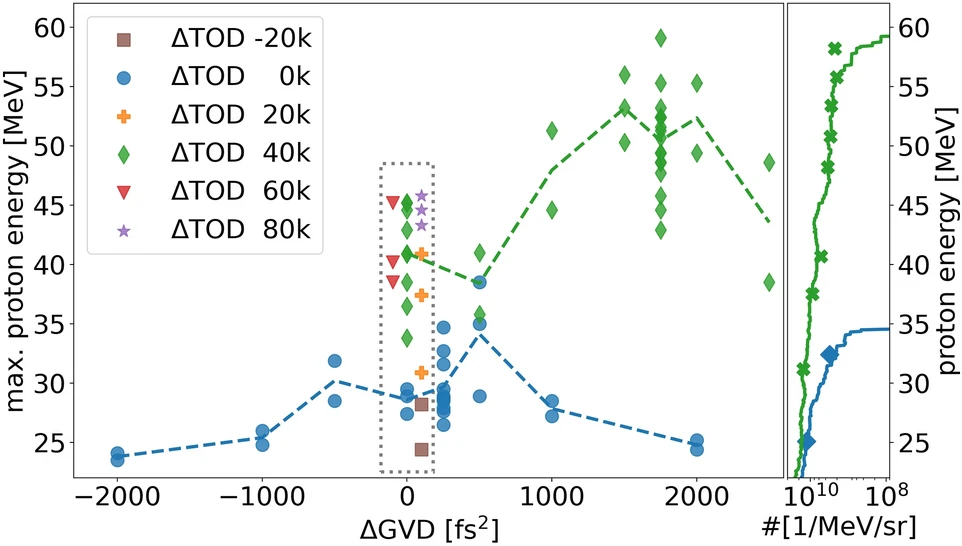
 Light: Science and Applications 12(2023), 71